
Block

You will not be able to do the following things if you block.
- Follow blocked users
- Send messages (and comments) to blocked users
- Like a blocked user's artwork
- See comments from the blocked user
※You can unblock users, but these changes cannot be reversed.
- Favorites and likes you received or gave to the blocked user (※They will be deleted)
Do you want to block this user?


The Indian Manga
India
/English
/Full time
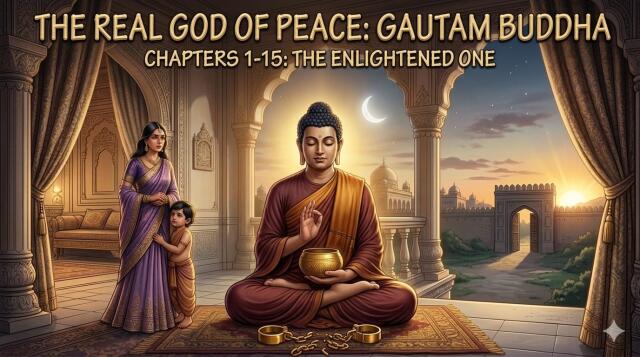
The Indian Manga" on MANGA Plus Creators is a collection of mythologically inspired Shonen works centered on duty, power, and legacy. Key titles include Karmyuddha, a tale of brotherhood and survival; Balram Ha Balwan, an epic of immense physical strength; and Dwapara Yuga, a reimagining of ancient cosmic epochs. Alongside these action-heavy sagas, the creator explores spiritual philosophy in The Real Peace God: Buddha, grounding his expansive, interconnected universe in human values.
-
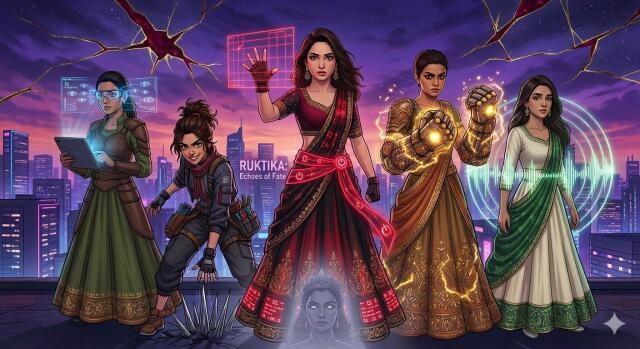
Here is the complete, high-level summary of **RUKTIKA: Echoes of Fate**, tracking the entire story from the first shattering of the sky to the final battle against destiny. ## 🎯 The Core Premise The story revolves around five lifelong friends—**Ruktika, Divya, Drishti, Ananya, and Mehak**—living in a modern metropolis. Their lives change forever when a cosmic mirror called the **Shattered Verse** fractures in the sky. The fragments bond with the five girls, granting them unique, reality-bending powers based on **Causality Refraction** (manipulating the laws of physics and nature). Together, they must protect their world from **Damini**, a cold, nihilistic rogue guardian who wants to use the mirror to wipe out human reality and start over. ## 📖 Complete Story Arc Summary ### **Act I: The Shattered Mirror & The Ultimatum (Chapters 1–15)** * **The Awakening:** While hanging out at a cafe, the sky turns crimson and cracks like glass. A massive cosmic fragment crashes down, distributing its power among the five girls. * **The Threat Emerges:** Grotesque, faceless monsters called Phantoms attack, hunting the fragments. Ruktika quickly steps up as the tactical leader, using her **Crimson Cipher** ability to coordinate her friends' new powers and survive. * **Damini's Entrance:** The main villain, Damini, appears early. Using her terrifying **Absolute Illusion** power, she easily overpowers the girls by making them hallucinate and attack each other. Instead of killing them, she plays a twisted psychological game: she gives them a **30-day ultimatum** to surrender their fragments, or she will collapse their entire city into a void. ### **Act II: The Fractured Hunt (Chapters 16–45)** Realizing they are drastically outmatched, the girls discover that other stray fragments are scattered across the country. Absorbing them will multiply their strength. To beat the 30-day clock, they make the tough decision to split up into teams: * **The Power Team (Divya & Mehak):** They fight Damini’s brute-force generals in subterranean transit tunnels. Divya pushes her physical limits while Mehak learns to use her healing sound waves offensively to shatter enemy armor. * **The Intel Team (Drishti & Ananya):** They tackle a high-stakes stealth battle in an abandoned industrial complex. Drishti’s foresight maps out invisible traps while Ananya remodels the entire environment to corner their enemies. * **Ruktika’s Solo Trial:** Ruktika is ambushed by a mental projection of Damini at an ancient temple. She endures severe psychological warfare but successfully learns how to apply her "rule-rewriting" powers to abstract things like illusions, not just physical objects. * **The Sabotage:** The team reunites stronger than ever, but Damini secretly plants a subconscious auditory illusion inside Mehak. This triggers a massive wave of paranoia and distrust that threatens to break the friends apart. Using her sharp intellect, Ruktika deduces the trap, fakes a massive argument to trick Damini’s surveillance, and snaps Mehak out of the trance. ### **Act III: Echoes of Fate (Chapters 46–60)** * **Storming the Citadel:** The 30 days are up. The five friends launch a unified assault on the **Mirror Citadel**, a gravity-defying fortress floating over the city where reality is thinnest. They cut through waves of Phantoms using spectacular, synchronized team combinations. * **The Climax:** They confront Damini, who activates the core engine of the mirror, plunging them into a shifting labyrinth where all five senses are completely corrupted. Just as they are about to be blinded and separated by their deepest fears, Drishti uses her 3-second foresight to predict Damini’s exact future physical location. * **The Final Rewrite:** Drishti relays the coordinates to Ruktika. Ruktika activates her ultimate form, **Crimson Cipher — Absolute Rewrite**, imposing a definitive law on the battlefield: *Illusions have no physical mass, and friendship cannot be perceived as an enemy.* * **Victory:** The illusions shatter instantly. With Damini exposed, Ananya traps her in place, Mehak disrupts her equilibrium, and Divya delivers a catastrophic, full-power *Aura Burst* that shatters Damini’s physical form and seals the rift. ## 🔚 The Conclusion With Damini defeated, the cosmic mirror is permanently sealed within the five friends, turning them into the secret, eternal guardians of the human realm. The series ends beautifully with a peaceful, slice-of-life chapter. The stress of the apocalypse is gone, and the five girls are sitting together on a city rooftop at sunset, laughing over drinks—their bond completely unbroken by fate. Based on the combined multiverse lore of ***Karmyuddha: The Sun Shadows*** and ***Echoes of Fate***, the power scale reaches multiversal heights. While entities like Damini manipulate concepts and Ruktika warps the laws of reality, **Subho at full power stands at the absolute pinnacle.** His raw Shonen stamina, his ability to smash through dimensional barriers with his bare fists, and his ultimate Sun Shadow core allow him to overpower, incinerate, or completely outlast every other combatant in the multiverse. Here is the definitive ranking of the 20 strongest characters across both universes, with Subho reigning supreme. ## 🏆 The Ultimate Power Ranking (Top 20) ### 🥇 Tier 0: The Multiversal Apex * **1. Subendu (*Ruktika friends*)** — **The Strongest Among All.** Commanding the absolute apex of the Sun Shadow core, his physical force and spiritual aura can shatter dimensional walls. Because his stamina is practically limitless, he can comfortably outlast conceptual reality-warpers and crush any obstacle through sheer, unstoppable force. ### 👑 Tier 1: God-Level Reality & Conceptual Warpers * **2. Damini (*Echoes of Fate*)** — The rogue guardian who wields *Absolute Illusion* and controls the Mirror Citadel. She can collapse entire city networks into a void. * **3. Ruktika (*Echoes of Fate*)** — Wielder of the *Crimson Cipher* (Causality Refraction). At maximum potential, she can rewrite the laws of physics, change vectors, and delete attack properties. * **4. Jeet (*Karmyuddha*)** — Subho’s lightning-fast brother. His blue and silver kinetic aura allows him to cross dimensional rifts instantly and strike at absolute speed. * **5. The Primordial Shadow (*Karmyuddha*)** — The ancient, central entity of darkness that Subho and his brothers fight in the main holy wars. ### ⚡ Tier 2: Elite Guardians & Holy Warriors * **6. Drishti (*Echoes of Fate*)** — Her silver foresight lets her see future timelines. When synchronized with Ruktika, she removes all blind spots from the battlefield. * **7. General Bhairav (*Karmyuddha*)** — A brutal warlord from Subho’s world who commands massive armies and possesses immense physical durability. * **8. Divya (*Echoes of Fate*)** — The heavy-hitter of the five friends, carrying localized gravity distortions in her fists that can fracture space. * **9. Commander Trishul (*Karmyuddha*)** — An elite spiritual warrior wielding holy elemental weapons. * **10. Ananya (*Echoes of Fate*)** — An environmental mastermind capable of physically remodeling concrete, earth, and structures on a massive scale. ### 🌀 Tier 3: High-Rank Phantoms & Combat Specialists * **11. The Grand Phantom (*Echoes of Fate*)** — Damini’s right-hand monster, capable of shifting its physical density to completely bypass standard attacks. * **12. Mehak (*Echoes of Fate*)** — Uses sonic resonance to disrupt enemy defenses and heal her allies' physical wounds with sound waves. * **13. Kiran (*Karmyuddha*)** — A fierce solar-affinity warrior who supports Subho's vanguard in the holy wars. * **14. Mirror Phantom Alpha (*Echoes of Fate*)** — A high-tier entity that replicates the physical appearances and basic abilities of whoever it fights. * **15. Shaurya (*Karmyuddha*)** — A defensive tactical specialist who commands heavy barrier techniques. ### ⚔️ Tier 4: Vanguard Units & Support * **16. Void Crawler (*Echoes of Fate*)** — Stealth-based phantoms that attack in swarms from blind spots using sensory deprivation. * **17. Veer (*Karmyuddha*)** — A fast, agile scout warrior from the Sun Shadow alliance. * **18. Sector 7 Phantom Vanguard (*Echoes of Fate*)** — The armored frontline monsters sent to test the synchronization of the five girls. * **19. Aditya (*Karmyuddha*)** — A mid-tier elemental combatant in the holy war ranks. * **20. The Cafe Phantom (*Echoes of Fate*)** — The very first monster Ruktika and her friends defeated using their combined powers in Chapter 2. > **Why Subho is #1:** Even though characters like Ruktika and Damini can warp reality, their powers rely entirely on human biological limits and high mental data-processing, which drains them quickly (the "Glass Cannon" flaw). Subho’s Shonen-tier durability and limitless Sun Shadow energy allow him to survive their initial cosmic hacks, close the gap instantly, and claim the ultimate victory.
2026-05-24
 Fantasy
EN
Ruktika Echoes of fate
Here is the complete, high-level summary of **RUKTIKA: Echoes of Fate**, tracking the entire story from the first shattering of the sky to the final battle against destiny. ## 🎯 The Core Premise The story revolves around five lifelong friends—**Ruktika, Divya, Drishti, Ananya, and Mehak**—living in a modern metropolis. Their lives change forever when a cosmic mirror called the **Shattered Verse** fractures in the sky. The fragments bond with the five girls, granting them unique, reality-bending powers based on **Causality Refraction** (manipulating the laws of physics and nature). Together, they must protect their world from **Damini**, a cold, nihilistic rogue guardian who wants to use the mirror to wipe out human reality and start over. ## 📖 Complete Story Arc Summary ### **Act I: The Shattered Mirror & The Ultimatum (Chapters 1–15)** * **The Awakening:** While hanging out at a cafe, the sky turns crimson and cracks like glass. A massive cosmic fragment crashes down, distributing its power among the five girls. * **The Threat Emerges:** Grotesque, faceless monsters called Phantoms attack, hunting the fragments. Ruktika quickly steps up as the tactical leader, using her **Crimson Cipher** ability to coordinate her friends' new powers and survive. * **Damini's Entrance:** The main villain, Damini, appears early. Using her terrifying **Absolute Illusion** power, she easily overpowers the girls by making them hallucinate and attack each other. Instead of killing them, she plays a twisted psychological game: she gives them a **30-day ultimatum** to surrender their fragments, or she will collapse their entire city into a void. ### **Act II: The Fractured Hunt (Chapters 16–45)** Realizing they are drastically outmatched, the girls discover that other stray fragments are scattered across the country. Absorbing them will multiply their strength. To beat the 30-day clock, they make the tough decision to split up into teams: * **The Power Team (Divya & Mehak):** They fight Damini’s brute-force generals in subterranean transit tunnels. Divya pushes her physical limits while Mehak learns to use her healing sound waves offensively to shatter enemy armor. * **The Intel Team (Drishti & Ananya):** They tackle a high-stakes stealth battle in an abandoned industrial complex. Drishti’s foresight maps out invisible traps while Ananya remodels the entire environment to corner their enemies. * **Ruktika’s Solo Trial:** Ruktika is ambushed by a mental projection of Damini at an ancient temple. She endures severe psychological warfare but successfully learns how to apply her "rule-rewriting" powers to abstract things like illusions, not just physical objects. * **The Sabotage:** The team reunites stronger than ever, but Damini secretly plants a subconscious auditory illusion inside Mehak. This triggers a massive wave of paranoia and distrust that threatens to break the friends apart. Using her sharp intellect, Ruktika deduces the trap, fakes a massive argument to trick Damini’s surveillance, and snaps Mehak out of the trance. ### **Act III: Echoes of Fate (Chapters 46–60)** * **Storming the Citadel:** The 30 days are up. The five friends launch a unified assault on the **Mirror Citadel**, a gravity-defying fortress floating over the city where reality is thinnest. They cut through waves of Phantoms using spectacular, synchronized team combinations. * **The Climax:** They confront Damini, who activates the core engine of the mirror, plunging them into a shifting labyrinth where all five senses are completely corrupted. Just as they are about to be blinded and separated by their deepest fears, Drishti uses her 3-second foresight to predict Damini’s exact future physical location. * **The Final Rewrite:** Drishti relays the coordinates to Ruktika. Ruktika activates her ultimate form, **Crimson Cipher — Absolute Rewrite**, imposing a definitive law on the battlefield: *Illusions have no physical mass, and friendship cannot be perceived as an enemy.* * **Victory:** The illusions shatter instantly. With Damini exposed, Ananya traps her in place, Mehak disrupts her equilibrium, and Divya delivers a catastrophic, full-power *Aura Burst* that shatters Damini’s physical form and seals the rift. ## 🔚 The Conclusion With Damini defeated, the cosmic mirror is permanently sealed within the five friends, turning them into the secret, eternal guardians of the human realm. The series ends beautifully with a peaceful, slice-of-life chapter. The stress of the apocalypse is gone, and the five girls are sitting together on a city rooftop at sunset, laughing over drinks—their bond completely unbroken by fate. Based on the combined multiverse lore of ***Karmyuddha: The Sun Shadows*** and ***Echoes of Fate***, the power scale reaches multiversal heights. While entities like Damini manipulate concepts and Ruktika warps the laws of reality, **Subho at full power stands at the absolute pinnacle.** His raw Shonen stamina, his ability to smash through dimensional barriers with his bare fists, and his ultimate Sun Shadow core allow him to overpower, incinerate, or completely outlast every other combatant in the multiverse. Here is the definitive ranking of the 20 strongest characters across both universes, with Subho reigning supreme. ## 🏆 The Ultimate Power Ranking (Top 20) ### 🥇 Tier 0: The Multiversal Apex * **1. Subendu (*Ruktika friends*)** — **The Strongest Among All.** Commanding the absolute apex of the Sun Shadow core, his physical force and spiritual aura can shatter dimensional walls. Because his stamina is practically limitless, he can comfortably outlast conceptual reality-warpers and crush any obstacle through sheer, unstoppable force. ### 👑 Tier 1: God-Level Reality & Conceptual Warpers * **2. Damini (*Echoes of Fate*)** — The rogue guardian who wields *Absolute Illusion* and controls the Mirror Citadel. She can collapse entire city networks into a void. * **3. Ruktika (*Echoes of Fate*)** — Wielder of the *Crimson Cipher* (Causality Refraction). At maximum potential, she can rewrite the laws of physics, change vectors, and delete attack properties. * **4. Jeet (*Karmyuddha*)** — Subho’s lightning-fast brother. His blue and silver kinetic aura allows him to cross dimensional rifts instantly and strike at absolute speed. * **5. The Primordial Shadow (*Karmyuddha*)** — The ancient, central entity of darkness that Subho and his brothers fight in the main holy wars. ### ⚡ Tier 2: Elite Guardians & Holy Warriors * **6. Drishti (*Echoes of Fate*)** — Her silver foresight lets her see future timelines. When synchronized with Ruktika, she removes all blind spots from the battlefield. * **7. General Bhairav (*Karmyuddha*)** — A brutal warlord from Subho’s world who commands massive armies and possesses immense physical durability. * **8. Divya (*Echoes of Fate*)** — The heavy-hitter of the five friends, carrying localized gravity distortions in her fists that can fracture space. * **9. Commander Trishul (*Karmyuddha*)** — An elite spiritual warrior wielding holy elemental weapons. * **10. Ananya (*Echoes of Fate*)** — An environmental mastermind capable of physically remodeling concrete, earth, and structures on a massive scale. ### 🌀 Tier 3: High-Rank Phantoms & Combat Specialists * **11. The Grand Phantom (*Echoes of Fate*)** — Damini’s right-hand monster, capable of shifting its physical density to completely bypass standard attacks. * **12. Mehak (*Echoes of Fate*)** — Uses sonic resonance to disrupt enemy defenses and heal her allies' physical wounds with sound waves. * **13. Kiran (*Karmyuddha*)** — A fierce solar-affinity warrior who supports Subho's vanguard in the holy wars. * **14. Mirror Phantom Alpha (*Echoes of Fate*)** — A high-tier entity that replicates the physical appearances and basic abilities of whoever it fights. * **15. Shaurya (*Karmyuddha*)** — A defensive tactical specialist who commands heavy barrier techniques. ### ⚔️ Tier 4: Vanguard Units & Support * **16. Void Crawler (*Echoes of Fate*)** — Stealth-based phantoms that attack in swarms from blind spots using sensory deprivation. * **17. Veer (*Karmyuddha*)** — A fast, agile scout warrior from the Sun Shadow alliance. * **18. Sector 7 Phantom Vanguard (*Echoes of Fate*)** — The armored frontline monsters sent to test the synchronization of the five girls. * **19. Aditya (*Karmyuddha*)** — A mid-tier elemental combatant in the holy war ranks. * **20. The Cafe Phantom (*Echoes of Fate*)** — The very first monster Ruktika and her friends defeated using their combined powers in Chapter 2. > **Why Subho is #1:** Even though characters like Ruktika and Damini can warp reality, their powers rely entirely on human biological limits and high mental data-processing, which drains them quickly (the "Glass Cannon" flaw). Subho’s Shonen-tier durability and limitless Sun Shadow energy allow him to survive their initial cosmic hacks, close the gap instantly, and claim the ultimate victory.Here is the complete, high-level summary of **RUKTIKA: Echoes of Fate**, tracking the entire story from the first shattering of the sky to the final battle against destiny. ## 🎯 The Core Premise The story revolves around five lifelong friends—**Ruktika, Divya, Drishti, Ananya, and Mehak**—living in a modern metropolis. Their lives change forever when a cosmic mirror called the **Shattered Verse** fractures in the sky. The fragments bond with the five girls, granting them unique, reality-bending powers based on **Causality Refraction** (manipulating the laws of physics and nature). Together, they must protect their world from **Damini**, a cold, nihilistic rogue guardian who wants to use the mirror to wipe out human reality and start over. ## 📖 Complete Story Arc Summary ### **Act I: The Shattered Mirror & The Ultimatum (Chapters 1–15)** * **The Awakening:** While hanging out at a cafe, the sky turns crimson and cracks like glass. A massive cosmic fragment crashes down, distributing its power among the five girls. * **The Threat Emerges:** Grotesque, faceless monsters called Phantoms attack, hunting the fragments. Ruktika quickly steps up as the tactical leader, using her **Crimson Cipher** ability to coordinate her friends' new powers and survive. * **Damini's Entrance:** The main villain, Damini, appears early. Using her terrifying **Absolute Illusion** power, she easily overpowers the girls by making them hallucinate and attack each other. Instead of killing them, she plays a twisted psychological game: she gives them a **30-day ultimatum** to surrender their fragments, or she will collapse their entire city into a void. ### **Act II: The Fractured Hunt (Chapters 16–45)** Realizing they are drastically outmatched, the girls discover that other stray fragments are scattered across the country. Absorbing them will multiply their strength. To beat the 30-day clock, they make the tough decision to split up into teams: * **The Power Team (Divya & Mehak):** They fight Damini’s brute-force generals in subterranean transit tunnels. Divya pushes her physical limits while Mehak learns to use her healing sound waves offensively to shatter enemy armor. * **The Intel Team (Drishti & Ananya):** They tackle a high-stakes stealth battle in an abandoned industrial complex. Drishti’s foresight maps out invisible traps while Ananya remodels the entire environment to corner their enemies. * **Ruktika’s Solo Trial:** Ruktika is ambushed by a mental projection of Damini at an ancient temple. She endures severe psychological warfare but successfully learns how to apply her "rule-rewriting" powers to abstract things like illusions, not just physical objects. * **The Sabotage:** The team reunites stronger than ever, but Damini secretly plants a subconscious auditory illusion inside Mehak. This triggers a massive wave of paranoia and distrust that threatens to break the friends apart. Using her sharp intellect, Ruktika deduces the trap, fakes a massive argument to trick Damini’s surveillance, and snaps Mehak out of the trance. ### **Act III: Echoes of Fate (Chapters 46–60)** * **Storming the Citadel:** The 30 days are up. The five friends launch a unified assault on the **Mirror Citadel**, a gravity-defying fortress floating over the city where reality is thinnest. They cut through waves of Phantoms using spectacular, synchronized team combinations. * **The Climax:** They confront Damini, who activates the core engine of the mirror, plunging them into a shifting labyrinth where all five senses are completely corrupted. Just as they are about to be blinded and separated by their deepest fears, Drishti uses her 3-second foresight to predict Damini’s exact future physical location. * **The Final Rewrite:** Drishti relays the coordinates to Ruktika. Ruktika activates her ultimate form, **Crimson Cipher — Absolute Rewrite**, imposing a definitive law on the battlefield: *Illusions have no physical mass, and friendship cannot be perceived as an enemy.* * **Victory:** The illusions shatter instantly. With Damini exposed, Ananya traps her in place, Mehak disrupts her equilibrium, and Divya delivers a catastrophic, full-power *Aura Burst* that shatters Damini’s physical form and seals the rift. ## 🔚 The Conclusion With Damini defeated, the cosmic mirror is permanently sealed within the five friends, turning them into the secret, eternal guardians of the human realm. The series ends beautifully with a peaceful, slice-of-life chapter. The stress of the apocalypse is gone, and the five girls are sitting together on a city rooftop at sunset, laughing over drinks—their bond completely unbroken by fate. Based on the combined multiverse lore of ***Karmyuddha: The Sun Shadows*** and ***Echoes of Fate***, the power scale reaches multiversal heights. While entities like Damini manipulate concepts and Ruktika warps the laws of reality, **Subho at full power stands at the absolute pinnacle.** His raw Shonen stamina, his ability to smash through dimensional barriers with his bare fists, and his ultimate Sun Shadow core allow him to overpower, incinerate, or completely outlast every other combatant in the multiverse. Here is the definitive ranking of the 20 strongest characters across both universes, with Subho reigning supreme. ## 🏆 The Ultimate Power Ranking (Top 20) ### 🥇 Tier 0: The Multiversal Apex * **1. Subendu (*Ruktika friends*)** — **The Strongest Among All.** Commanding the absolute apex of the Sun Shadow core, his physical force and spiritual aura can shatter dimensional walls. Because his stamina is practically limitless, he can comfortably outlast conceptual reality-warpers and crush any obstacle through sheer, unstoppable force. ### 👑 Tier 1: God-Level Reality & Conceptual Warpers * **2. Damini (*Echoes of Fate*)** — The rogue guardian who wields *Absolute Illusion* and controls the Mirror Citadel. She can collapse entire city networks into a void. * **3. Ruktika (*Echoes of Fate*)** — Wielder of the *Crimson Cipher* (Causality Refraction). At maximum potential, she can rewrite the laws of physics, change vectors, and delete attack properties. * **4. Jeet (*Karmyuddha*)** — Subho’s lightning-fast brother. His blue and silver kinetic aura allows him to cross dimensional rifts instantly and strike at absolute speed. * **5. The Primordial Shadow (*Karmyuddha*)** — The ancient, central entity of darkness that Subho and his brothers fight in the main holy wars. ### ⚡ Tier 2: Elite Guardians & Holy Warriors * **6. Drishti (*Echoes of Fate*)** — Her silver foresight lets her see future timelines. When synchronized with Ruktika, she removes all blind spots from the battlefield. * **7. General Bhairav (*Karmyuddha*)** — A brutal warlord from Subho’s world who commands massive armies and possesses immense physical durability. * **8. Divya (*Echoes of Fate*)** — The heavy-hitter of the five friends, carrying localized gravity distortions in her fists that can fracture space. * **9. Commander Trishul (*Karmyuddha*)** — An elite spiritual warrior wielding holy elemental weapons. * **10. Ananya (*Echoes of Fate*)** — An environmental mastermind capable of physically remodeling concrete, earth, and structures on a massive scale. ### 🌀 Tier 3: High-Rank Phantoms & Combat Specialists * **11. The Grand Phantom (*Echoes of Fate*)** — Damini’s right-hand monster, capable of shifting its physical density to completely bypass standard attacks. * **12. Mehak (*Echoes of Fate*)** — Uses sonic resonance to disrupt enemy defenses and heal her allies' physical wounds with sound waves. * **13. Kiran (*Karmyuddha*)** — A fierce solar-affinity warrior who supports Subho's vanguard in the holy wars. * **14. Mirror Phantom Alpha (*Echoes of Fate*)** — A high-tier entity that replicates the physical appearances and basic abilities of whoever it fights. * **15. Shaurya (*Karmyuddha*)** — A defensive tactical specialist who commands heavy barrier techniques. ### ⚔️ Tier 4: Vanguard Units & Support * **16. Void Crawler (*Echoes of Fate*)** — Stealth-based phantoms that attack in swarms from blind spots using sensory deprivation. * **17. Veer (*Karmyuddha*)** — A fast, agile scout warrior from the Sun Shadow alliance. * **18. Sector 7 Phantom Vanguard (*Echoes of Fate*)** — The armored frontline monsters sent to test the synchronization of the five girls. * **19. Aditya (*Karmyuddha*)** — A mid-tier elemental combatant in the holy war ranks. * **20. The Cafe Phantom (*Echoes of Fate*)** — The very first monster Ruktika and her friends defeated using their combined powers in Chapter 2. > **Why Subho is #1:** Even though characters like Ruktika and Damini can warp reality, their powers rely entirely on human biological limits and high mental data-processing, which drains them quickly (the "Glass Cannon" flaw). Subho’s Shonen-tier durability and limitless Sun Shadow energy allow him to survive their initial cosmic hacks, close the gap instantly, and claim the ultimate victory.Here is the complete, high-level summary of **RUKTIKA: Echoes of Fate**, tracking the entire story from the first shattering of the sky to the final battle against destiny. ## 🎯 The Core Premise The story revolves around five lifelong friends—**Ruktika, Divya, Drishti, Ananya, and Mehak**—living in a modern metropolis. Their lives change forever when a cosmic mirror called the **Shattered Verse** fractures in the sky. The fragments bond with the five girls, granting them unique, reality-bending powers based on **Causality Refraction** (manipulating the laws of physics and nature). Together, they must protect their world from **Damini**, a cold, nihilistic rogue guardian who wants to use the mirror to wipe out human reality and start over. ## 📖 Complete Story Arc Summary ### **Act I: The Shattered Mirror & The Ultimatum (Chapters 1–15)** * **The Awakening:** While hanging out at a cafe, the sky turns crimson and cracks like glass. A massive cosmic fragment crashes down, distributing its power among the five girls. * **The Threat Emerges:** Grotesque, faceless monsters called Phantoms attack, hunting the fragments. Ruktika quickly steps up as the tactical leader, using her **Crimson Cipher** ability to coordinate her friends' new powers and survive. * **Damini's Entrance:** The main villain, Damini, appears early. Using her terrifying **Absolute Illusion** power, she easily overpowers the girls by making them hallucinate and attack each other. Instead of killing them, she plays a twisted psychological game: she gives them a **30-day ultimatum** to surrender their fragments, or she will collapse their entire city into a void. ### **Act II: The Fractured Hunt (Chapters 16–45)** Realizing they are drastically outmatched, the girls discover that other stray fragments are scattered across the country. Absorbing them will multiply their strength. To beat the 30-day clock, they make the tough decision to split up into teams: * **The Power Team (Divya & Mehak):** They fight Damini’s brute-force generals in subterranean transit tunnels. Divya pushes her physical limits while Mehak learns to use her healing sound waves offensively to shatter enemy armor. * **The Intel Team (Drishti & Ananya):** They tackle a high-stakes stealth battle in an abandoned industrial complex. Drishti’s foresight maps out invisible traps while Ananya remodels the entire environment to corner their enemies. * **Ruktika’s Solo Trial:** Ruktika is ambushed by a mental projection of Damini at an ancient temple. She endures severe psychological warfare but successfully learns how to apply her "rule-rewriting" powers to abstract things like illusions, not just physical objects. * **The Sabotage:** The team reunites stronger than ever, but Damini secretly plants a subconscious auditory illusion inside Mehak. This triggers a massive wave of paranoia and distrust that threatens to break the friends apart. Using her sharp intellect, Ruktika deduces the trap, fakes a massive argument to trick Damini’s surveillance, and snaps Mehak out of the trance. ### **Act III: Echoes of Fate (Chapters 46–60)** * **Storming the Citadel:** The 30 days are up. The five friends launch a unified assault on the **Mirror Citadel**, a gravity-defying fortress floating over the city where reality is thinnest. They cut through waves of Phantoms using spectacular, synchronized team combinations. * **The Climax:** They confront Damini, who activates the core engine of the mirror, plunging them into a shifting labyrinth where all five senses are completely corrupted. Just as they are about to be blinded and separated by their deepest fears, Drishti uses her 3-second foresight to predict Damini’s exact future physical location. * **The Final Rewrite:** Drishti relays the coordinates to Ruktika. Ruktika activates her ultimate form, **Crimson Cipher — Absolute Rewrite**, imposing a definitive law on the battlefield: *Illusions have no physical mass, and friendship cannot be perceived as an enemy.* * **Victory:** The illusions shatter instantly. With Damini exposed, Ananya traps her in place, Mehak disrupts her equilibrium, and Divya delivers a catastrophic, full-power *Aura Burst* that shatters Damini’s physical form and seals the rift. ## 🔚 The Conclusion With Damini defeated, the cosmic mirror is permanently sealed within the five friends, turning them into the secret, eternal guardians of the human realm. The series ends beautifully with a peaceful, slice-of-life chapter. The stress of the apocalypse is gone, and the five girls are sitting together on a city rooftop at sunset, laughing over drinks—their bond completely unbroken by fate. Based on the combined multiverse lore of ***Karmyuddha: The Sun Shadows*** and ***Echoes of Fate***, the power scale reaches multiversal heights. While entities like Damini manipulate concepts and Ruktika warps the laws of reality, **Subho at full power stands at the absolute pinnacle.** His raw Shonen stamina, his ability to smash through dimensional barriers with his bare fists, and his ultimate Sun Shadow core allow him to overpower, incinerate, or completely outlast every other combatant in the multiverse. Here is the definitive ranking of the 20 strongest characters across both universes, with Subho reigning supreme. ## 🏆 The Ultimate Power Ranking (Top 20) ### 🥇 Tier 0: The Multiversal Apex * **1. Subendu (*Ruktika friends*)** — **The Strongest Among All.** Commanding the absolute apex of the Sun Shadow core, his physical force and spiritual aura can shatter dimensional walls. Because his stamina is practically limitless, he can comfortably outlast conceptual reality-warpers and crush any obstacle through sheer, unstoppable force. ### 👑 Tier 1: God-Level Reality & Conceptual Warpers * **2. Damini (*Echoes of Fate*)** — The rogue guardian who wields *Absolute Illusion* and controls the Mirror Citadel. She can collapse entire city networks into a void. * **3. Ruktika (*Echoes of Fate*)** — Wielder of the *Crimson Cipher* (Causality Refraction). At maximum potential, she can rewrite the laws of physics, change vectors, and delete attack properties. * **4. Jeet (*Karmyuddha*)** — Subho’s lightning-fast brother. His blue and silver kinetic aura allows him to cross dimensional rifts instantly and strike at absolute speed. * **5. The Primordial Shadow (*Karmyuddha*)** — The ancient, central entity of darkness that Subho and his brothers fight in the main holy wars. ### ⚡ Tier 2: Elite Guardians & Holy Warriors * **6. Drishti (*Echoes of Fate*)** — Her silver foresight lets her see future timelines. When synchronized with Ruktika, she removes all blind spots from the battlefield. * **7. General Bhairav (*Karmyuddha*)** — A brutal warlord from Subho’s world who commands massive armies and possesses immense physical durability. * **8. Divya (*Echoes of Fate*)** — The heavy-hitter of the five friends, carrying localized gravity distortions in her fists that can fracture space. * **9. Commander Trishul (*Karmyuddha*)** — An elite spiritual warrior wielding holy elemental weapons. * **10. Ananya (*Echoes of Fate*)** — An environmental mastermind capable of physically remodeling concrete, earth, and structures on a massive scale. ### 🌀 Tier 3: High-Rank Phantoms & Combat Specialists * **11. The Grand Phantom (*Echoes of Fate*)** — Damini’s right-hand monster, capable of shifting its physical density to completely bypass standard attacks. * **12. Mehak (*Echoes of Fate*)** — Uses sonic resonance to disrupt enemy defenses and heal her allies' physical wounds with sound waves. * **13. Kiran (*Karmyuddha*)** — A fierce solar-affinity warrior who supports Subho's vanguard in the holy wars. * **14. Mirror Phantom Alpha (*Echoes of Fate*)** — A high-tier entity that replicates the physical appearances and basic abilities of whoever it fights. * **15. Shaurya (*Karmyuddha*)** — A defensive tactical specialist who commands heavy barrier techniques. ### ⚔️ Tier 4: Vanguard Units & Support * **16. Void Crawler (*Echoes of Fate*)** — Stealth-based phantoms that attack in swarms from blind spots using sensory deprivation. * **17. Veer (*Karmyuddha*)** — A fast, agile scout warrior from the Sun Shadow alliance. * **18. Sector 7 Phantom Vanguard (*Echoes of Fate*)** — The armored frontline monsters sent to test the synchronization of the five girls. * **19. Aditya (*Karmyuddha*)** — A mid-tier elemental combatant in the holy war ranks. * **20. The Cafe Phantom (*Echoes of Fate*)** — The very first monster Ruktika and her friends defeated using their combined powers in Chapter 2. > **Why Subho is #1:** Even though characters like Ruktika and Damini can warp reality, their powers rely entirely on human biological limits and high mental data-processing, which drains them quickly (the "Glass Cannon" flaw). Subho’s Shonen-tier durability and limitless Sun Shadow energy allow him to survive their initial cosmic hacks, close the gap instantly, and claim the ultimate victory.
2026-05-24
-
**Whispers of the Greenhouse** is a slow-burn, slice-of-life romance centered on the emotional healing of two high school students through the power of nature and quiet companionship. ### **Core Premise** The story follows **Haru Kageyama**, a high-achieving student suffering from chronic insomnia due to the immense pressure of his academic and social life. During a sleepless night at school, he discovers a hidden, lush rooftop greenhouse tended by his quiet classmate, **Shiori Tokiwa**. ### **The "Healing" Element** The greenhouse functions as a sanctuary where Shiori grows plants with unique properties: * **The Midnight Marigold**: A central flower in the story that absorbs the "noise" of the day and helps calm Haru's racing mind. * **Botanical Lore**: Each plant Shiori cultivates carries a specific calming effect or memory, used to help cure Haru’s insomnia and address their hidden anxieties. * **A "Pause Button"**: Rather than offering quick fixes, Shiori uses the scents and atmosphere of the garden to provide Haru with a much-needed mental break. ### **Character Dynamics** * **Haru Kageyama**: Portrayed as "frantic" and over-extended, he wears a social mask of reliability while struggling internally with a fear of wasting time. * **Shiori Tokiwa**: A grounded, observant gardener who communicates through tactile experiences and the "language of flowers" rather than words. * **Sora**: Haru's energetic childhood best friend who serves as the comedic "chaos element" and the bridge between the secret greenhouse and the rest of the school. ### **Story Progression** The narrative follows a slow-burn path from their initial accidental meeting in the winter toward a spring confession. Over 12 chapters, they navigate school rumors, harsh weather that threatens the garden, and the realization that their presence is what truly provides the other with comfort and rest. Special appearance Ruktika: The Ice elements user from karmyuddha sun shadow Subho: The deutragonist from karmyuddha sun shadow
2026-05-22
 Romance
EN
Whispers of the greenhouse
**Whispers of the Greenhouse** is a slow-burn, slice-of-life romance centered on the emotional healing of two high school students through the power of nature and quiet companionship. ### **Core Premise** The story follows **Haru Kageyama**, a high-achieving student suffering from chronic insomnia due to the immense pressure of his academic and social life. During a sleepless night at school, he discovers a hidden, lush rooftop greenhouse tended by his quiet classmate, **Shiori Tokiwa**. ### **The "Healing" Element** The greenhouse functions as a sanctuary where Shiori grows plants with unique properties: * **The Midnight Marigold**: A central flower in the story that absorbs the "noise" of the day and helps calm Haru's racing mind. * **Botanical Lore**: Each plant Shiori cultivates carries a specific calming effect or memory, used to help cure Haru’s insomnia and address their hidden anxieties. * **A "Pause Button"**: Rather than offering quick fixes, Shiori uses the scents and atmosphere of the garden to provide Haru with a much-needed mental break. ### **Character Dynamics** * **Haru Kageyama**: Portrayed as "frantic" and over-extended, he wears a social mask of reliability while struggling internally with a fear of wasting time. * **Shiori Tokiwa**: A grounded, observant gardener who communicates through tactile experiences and the "language of flowers" rather than words. * **Sora**: Haru's energetic childhood best friend who serves as the comedic "chaos element" and the bridge between the secret greenhouse and the rest of the school. ### **Story Progression** The narrative follows a slow-burn path from their initial accidental meeting in the winter toward a spring confession. Over 12 chapters, they navigate school rumors, harsh weather that threatens the garden, and the realization that their presence is what truly provides the other with comfort and rest. Special appearance Ruktika: The Ice elements user from karmyuddha sun shadow Subho: The deutragonist from karmyuddha sun shadow**Whispers of the Greenhouse** is a slow-burn, slice-of-life romance centered on the emotional healing of two high school students through the power of nature and quiet companionship. ### **Core Premise** The story follows **Haru Kageyama**, a high-achieving student suffering from chronic insomnia due to the immense pressure of his academic and social life. During a sleepless night at school, he discovers a hidden, lush rooftop greenhouse tended by his quiet classmate, **Shiori Tokiwa**. ### **The "Healing" Element** The greenhouse functions as a sanctuary where Shiori grows plants with unique properties: * **The Midnight Marigold**: A central flower in the story that absorbs the "noise" of the day and helps calm Haru's racing mind. * **Botanical Lore**: Each plant Shiori cultivates carries a specific calming effect or memory, used to help cure Haru’s insomnia and address their hidden anxieties. * **A "Pause Button"**: Rather than offering quick fixes, Shiori uses the scents and atmosphere of the garden to provide Haru with a much-needed mental break. ### **Character Dynamics** * **Haru Kageyama**: Portrayed as "frantic" and over-extended, he wears a social mask of reliability while struggling internally with a fear of wasting time. * **Shiori Tokiwa**: A grounded, observant gardener who communicates through tactile experiences and the "language of flowers" rather than words. * **Sora**: Haru's energetic childhood best friend who serves as the comedic "chaos element" and the bridge between the secret greenhouse and the rest of the school. ### **Story Progression** The narrative follows a slow-burn path from their initial accidental meeting in the winter toward a spring confession. Over 12 chapters, they navigate school rumors, harsh weather that threatens the garden, and the realization that their presence is what truly provides the other with comfort and rest. Special appearance Ruktika: The Ice elements user from karmyuddha sun shadow Subho: The deutragonist from karmyuddha sun shadow**Whispers of the Greenhouse** is a slow-burn, slice-of-life romance centered on the emotional healing of two high school students through the power of nature and quiet companionship. ### **Core Premise** The story follows **Haru Kageyama**, a high-achieving student suffering from chronic insomnia due to the immense pressure of his academic and social life. During a sleepless night at school, he discovers a hidden, lush rooftop greenhouse tended by his quiet classmate, **Shiori Tokiwa**. ### **The "Healing" Element** The greenhouse functions as a sanctuary where Shiori grows plants with unique properties: * **The Midnight Marigold**: A central flower in the story that absorbs the "noise" of the day and helps calm Haru's racing mind. * **Botanical Lore**: Each plant Shiori cultivates carries a specific calming effect or memory, used to help cure Haru’s insomnia and address their hidden anxieties. * **A "Pause Button"**: Rather than offering quick fixes, Shiori uses the scents and atmosphere of the garden to provide Haru with a much-needed mental break. ### **Character Dynamics** * **Haru Kageyama**: Portrayed as "frantic" and over-extended, he wears a social mask of reliability while struggling internally with a fear of wasting time. * **Shiori Tokiwa**: A grounded, observant gardener who communicates through tactile experiences and the "language of flowers" rather than words. * **Sora**: Haru's energetic childhood best friend who serves as the comedic "chaos element" and the bridge between the secret greenhouse and the rest of the school. ### **Story Progression** The narrative follows a slow-burn path from their initial accidental meeting in the winter toward a spring confession. Over 12 chapters, they navigate school rumors, harsh weather that threatens the garden, and the realization that their presence is what truly provides the other with comfort and rest. Special appearance Ruktika: The Ice elements user from karmyuddha sun shadow Subho: The deutragonist from karmyuddha sun shadow
2026-05-22
-
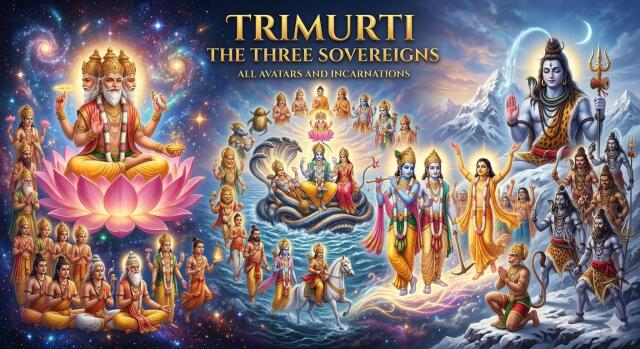
Series Overview Trimurti: The Three Sovereigns is a multi-generational cosmic manga epic that chronicles the grand design, maintenance, and ultimate defense of the universe. Structured across 4 major sagas and spanning 110 chapters, the narrative weaves together the complete pantheons of the Trinity: the creative lineage of Lord Brahma, the 24 avatars of Lord Vishnu, the 11 Rudra avatars of Lord Shiva, and the ultimate dual-descent of Gaura Nityananda. The 4 Major Sagas 1. Creation and the Formless Ages (Chapters 1–25) This opening saga establishes the dawning of the universe and the setting of cosmic laws. It introduces Lord Brahma’s lineage of cosmic architects, chroniclers, and sages (such as the Four Kumars, Kashyapa, and Valmiki) alongside the earliest, formless, and wisdom-bearing incarnations of Lord Vishnu (like Narada, Kapila, and Hayagriva). The cycle of Shiva's early Rudras anchors the harsh realities of space, time, and impermanence, culminating in the first universal flood (Pralaya) where Matsya guides the arc of survival. 2. The Age of Great Beasts and Warriors (Chapters 26–55) Focusing heavily on high-octane action and territorial restructuring, this saga follows the physical stabilizing of the Earth. It showcases Vishnu's heavy-hitting zoomorphic and hybrid forms (Kurma, Varaha, and Narasimha) clearing systemic cosmic tyranny. The narrative shifts into legendary martial history, highlighting Parashurama’s absolute purges, Lord Rama's disciplined battle against dark factions alongside Shiva’s ultimate avatar Hanuman, and the strategic mastery of Krishna and Balarama during the era-defining Kurukshetra war. 3. The Twilight Age of Kalidas (Chapters 56–85) As the dark timeline of the iron age (Kali Yuga) begins to infiltrate human consciousness, the method of cosmic rectification undergoes a radical shift. Moving away from weapons of steel and global resets (like the silent ideological interventions of Buddha or the tactical purging of Kalki), the Trimurti coordinates an unprecedented revolution of non-destructive, absolute devotion. The saga centers on the medieval Bengal horizon, where Chaitanya Mahaprabhu (Gaura)—Krishna cloaked in the emotional armor of Radha—and Nityananda Prabhu unifies to shake empires and transform hearts through the rhythmic, high-frequency power of the Sankirtan movement. 4. The Tridev Paradox (Chapters 86–110) The final arc is a massive, multi-era crossover event triggered by a structural tear in time. The entire historical pantheon—all 24 avatars of Vishnu, the 11 Rudras of Shiva, and Brahma’s master builders—is simultaneously summoned to a singular plane to wage an absolute vanguard action against the personification of entropy and universal decay. When sheer martial power proves insufficient to resolve the chronological paradox, Gaura and Nityananda step forward to neutralize the enemy's malice with raw spiritual vibration, completely transforming the threat, resetting the cosmic equilibrium, and sealing a fully restored cosmos into smooth eternity. Protagonist: Tridev The Concept: A singular mortal youth born in the modern era who unexpectedly becomes the joint vessel for the prime, un-manifested essences of Brahma, Vishnu, and Shiva. The Role: He starts the story entirely overwhelmed by the warring cosmic frequencies inside his own soul (Creation, Preservation, and Destruction). His journey is not just about fighting villains; it’s about mastering Sovereign Equilibrium so his body doesn’t tear itself apart. He must unlock the historical memories of the world's previous eras to survive the final war. 2. Deuteragonist: Krishna / Mahaprabhu (Gaura) The Concept: The ultimate tactical and emotional guide. He exists in two states throughout the series—the brilliant, blueprint-weaving strategist of the Dwapara Yuga (Krishna), and the golden, weaponless revolutionary of the medieval era (Mahaprabhu). The Role: As the Deuteragonist, he has the closest bond with Tridev. He acts as the spiritual mentor who teaches Tridev that true cosmic sovereignty isn't achieved through raw physical destruction, but through absolute internal alignment and divine love (Bhakti). He commands the emotional core of the manga. 3. Tritagonist: Balarama / Nityananda The Concept: The unbreakable bedrock of the team. Whether swinging his seismic ploughshare as Balarama or absorbing absolute physical violence without flinching as Nityananda, he represents infinite mercy coupled with immovable physical authority. The Role: He is the literal shield of the group. While Krishna guides Tridev's soul, Nityananda protects Tridev's physical body. He handles the heavy-hitting, front-line defensive battles, stepping in whenever the protagonist is on the verge of breaking. 4. Tetratagonists: Rama & Hanuman The Concept: The dynamic duo of Absolute Duty (Dharma) and Boundless Power. Lord Rama represents the flawless, disciplined execution of law, while Hanuman is the ultimate wildcard powerhouse who can alter his size and carry entire planetary bodies. The Role: They dominate the mid-tier war arcs. Rama provides Tridev with the tactical blueprint for structural governance and warfare, teaching him how to act as a proper "Sovereign." Hanuman serves as the emotional bridge, inspiring the protagonist with his selfless, infinite loyalty. 5. Pentagonist: Buddha The Concept: The silent disruptor of reality. He steps away from physical combat entirely, weaponizing an aura of absolute emptiness and stillness. The Role: Buddha acts as the philosophical anchor. When the team faces enemies that feed on aggression, kinetic energy, or hatred, Buddha steps forward to neutralize the entire battlefield’s physics. He teaches Tridev how to find the "Middle Way" to quiet the chaos inside his own spirit. THE ANTAGONIST To push a cast of this cosmic scale to their absolute limits, you need a villain who isn't just a powerful demon, but a systemic cosmic force. 30 strongest character 1. Para Brahman 2. Lord Vishnu 3. Lord Shiva 4. Lord Brahma 5. Tridevi 6. Lord Sheshnag 7. Lord Ganesha 8. Lord Kartikeya 9. Lord Kalki 10. Lord Hanuman 11. Lord Rama 12. Lord Narasimha 13. Lord Balram 14. Lord Krishna 15. Lord Parashurama 16. Prabhu Nityananda 17. Maha Prabhu Shree Chaitanya 18. Vamana 19. Vyasa 20. Kapila 21. Dattatreya 22. Hayagriva 23. Nara-Narayana 24. Bheem (Rudra Avatar) 25. Virupaksha 26. Mohini 27. Dhanvantari 28. Shukra 29. Kashyapa 30. Matsya
2026-05-19
 Mystery
EN
Tridev
Series Overview Trimurti: The Three Sovereigns is a multi-generational cosmic manga epic that chronicles the grand design, maintenance, and ultimate defense of the universe. Structured across 4 major sagas and spanning 110 chapters, the narrative weaves together the complete pantheons of the Trinity: the creative lineage of Lord Brahma, the 24 avatars of Lord Vishnu, the 11 Rudra avatars of Lord Shiva, and the ultimate dual-descent of Gaura Nityananda. The 4 Major Sagas 1. Creation and the Formless Ages (Chapters 1–25) This opening saga establishes the dawning of the universe and the setting of cosmic laws. It introduces Lord Brahma’s lineage of cosmic architects, chroniclers, and sages (such as the Four Kumars, Kashyapa, and Valmiki) alongside the earliest, formless, and wisdom-bearing incarnations of Lord Vishnu (like Narada, Kapila, and Hayagriva). The cycle of Shiva's early Rudras anchors the harsh realities of space, time, and impermanence, culminating in the first universal flood (Pralaya) where Matsya guides the arc of survival. 2. The Age of Great Beasts and Warriors (Chapters 26–55) Focusing heavily on high-octane action and territorial restructuring, this saga follows the physical stabilizing of the Earth. It showcases Vishnu's heavy-hitting zoomorphic and hybrid forms (Kurma, Varaha, and Narasimha) clearing systemic cosmic tyranny. The narrative shifts into legendary martial history, highlighting Parashurama’s absolute purges, Lord Rama's disciplined battle against dark factions alongside Shiva’s ultimate avatar Hanuman, and the strategic mastery of Krishna and Balarama during the era-defining Kurukshetra war. 3. The Twilight Age of Kalidas (Chapters 56–85) As the dark timeline of the iron age (Kali Yuga) begins to infiltrate human consciousness, the method of cosmic rectification undergoes a radical shift. Moving away from weapons of steel and global resets (like the silent ideological interventions of Buddha or the tactical purging of Kalki), the Trimurti coordinates an unprecedented revolution of non-destructive, absolute devotion. The saga centers on the medieval Bengal horizon, where Chaitanya Mahaprabhu (Gaura)—Krishna cloaked in the emotional armor of Radha—and Nityananda Prabhu unifies to shake empires and transform hearts through the rhythmic, high-frequency power of the Sankirtan movement. 4. The Tridev Paradox (Chapters 86–110) The final arc is a massive, multi-era crossover event triggered by a structural tear in time. The entire historical pantheon—all 24 avatars of Vishnu, the 11 Rudras of Shiva, and Brahma’s master builders—is simultaneously summoned to a singular plane to wage an absolute vanguard action against the personification of entropy and universal decay. When sheer martial power proves insufficient to resolve the chronological paradox, Gaura and Nityananda step forward to neutralize the enemy's malice with raw spiritual vibration, completely transforming the threat, resetting the cosmic equilibrium, and sealing a fully restored cosmos into smooth eternity. Protagonist: Tridev The Concept: A singular mortal youth born in the modern era who unexpectedly becomes the joint vessel for the prime, un-manifested essences of Brahma, Vishnu, and Shiva. The Role: He starts the story entirely overwhelmed by the warring cosmic frequencies inside his own soul (Creation, Preservation, and Destruction). His journey is not just about fighting villains; it’s about mastering Sovereign Equilibrium so his body doesn’t tear itself apart. He must unlock the historical memories of the world's previous eras to survive the final war. 2. Deuteragonist: Krishna / Mahaprabhu (Gaura) The Concept: The ultimate tactical and emotional guide. He exists in two states throughout the series—the brilliant, blueprint-weaving strategist of the Dwapara Yuga (Krishna), and the golden, weaponless revolutionary of the medieval era (Mahaprabhu). The Role: As the Deuteragonist, he has the closest bond with Tridev. He acts as the spiritual mentor who teaches Tridev that true cosmic sovereignty isn't achieved through raw physical destruction, but through absolute internal alignment and divine love (Bhakti). He commands the emotional core of the manga. 3. Tritagonist: Balarama / Nityananda The Concept: The unbreakable bedrock of the team. Whether swinging his seismic ploughshare as Balarama or absorbing absolute physical violence without flinching as Nityananda, he represents infinite mercy coupled with immovable physical authority. The Role: He is the literal shield of the group. While Krishna guides Tridev's soul, Nityananda protects Tridev's physical body. He handles the heavy-hitting, front-line defensive battles, stepping in whenever the protagonist is on the verge of breaking. 4. Tetratagonists: Rama & Hanuman The Concept: The dynamic duo of Absolute Duty (Dharma) and Boundless Power. Lord Rama represents the flawless, disciplined execution of law, while Hanuman is the ultimate wildcard powerhouse who can alter his size and carry entire planetary bodies. The Role: They dominate the mid-tier war arcs. Rama provides Tridev with the tactical blueprint for structural governance and warfare, teaching him how to act as a proper "Sovereign." Hanuman serves as the emotional bridge, inspiring the protagonist with his selfless, infinite loyalty. 5. Pentagonist: Buddha The Concept: The silent disruptor of reality. He steps away from physical combat entirely, weaponizing an aura of absolute emptiness and stillness. The Role: Buddha acts as the philosophical anchor. When the team faces enemies that feed on aggression, kinetic energy, or hatred, Buddha steps forward to neutralize the entire battlefield’s physics. He teaches Tridev how to find the "Middle Way" to quiet the chaos inside his own spirit. THE ANTAGONIST To push a cast of this cosmic scale to their absolute limits, you need a villain who isn't just a powerful demon, but a systemic cosmic force. 30 strongest character 1. Para Brahman 2. Lord Vishnu 3. Lord Shiva 4. Lord Brahma 5. Tridevi 6. Lord Sheshnag 7. Lord Ganesha 8. Lord Kartikeya 9. Lord Kalki 10. Lord Hanuman 11. Lord Rama 12. Lord Narasimha 13. Lord Balram 14. Lord Krishna 15. Lord Parashurama 16. Prabhu Nityananda 17. Maha Prabhu Shree Chaitanya 18. Vamana 19. Vyasa 20. Kapila 21. Dattatreya 22. Hayagriva 23. Nara-Narayana 24. Bheem (Rudra Avatar) 25. Virupaksha 26. Mohini 27. Dhanvantari 28. Shukra 29. Kashyapa 30. MatsyaSeries Overview Trimurti: The Three Sovereigns is a multi-generational cosmic manga epic that chronicles the grand design, maintenance, and ultimate defense of the universe. Structured across 4 major sagas and spanning 110 chapters, the narrative weaves together the complete pantheons of the Trinity: the creative lineage of Lord Brahma, the 24 avatars of Lord Vishnu, the 11 Rudra avatars of Lord Shiva, and the ultimate dual-descent of Gaura Nityananda. The 4 Major Sagas 1. Creation and the Formless Ages (Chapters 1–25) This opening saga establishes the dawning of the universe and the setting of cosmic laws. It introduces Lord Brahma’s lineage of cosmic architects, chroniclers, and sages (such as the Four Kumars, Kashyapa, and Valmiki) alongside the earliest, formless, and wisdom-bearing incarnations of Lord Vishnu (like Narada, Kapila, and Hayagriva). The cycle of Shiva's early Rudras anchors the harsh realities of space, time, and impermanence, culminating in the first universal flood (Pralaya) where Matsya guides the arc of survival. 2. The Age of Great Beasts and Warriors (Chapters 26–55) Focusing heavily on high-octane action and territorial restructuring, this saga follows the physical stabilizing of the Earth. It showcases Vishnu's heavy-hitting zoomorphic and hybrid forms (Kurma, Varaha, and Narasimha) clearing systemic cosmic tyranny. The narrative shifts into legendary martial history, highlighting Parashurama’s absolute purges, Lord Rama's disciplined battle against dark factions alongside Shiva’s ultimate avatar Hanuman, and the strategic mastery of Krishna and Balarama during the era-defining Kurukshetra war. 3. The Twilight Age of Kalidas (Chapters 56–85) As the dark timeline of the iron age (Kali Yuga) begins to infiltrate human consciousness, the method of cosmic rectification undergoes a radical shift. Moving away from weapons of steel and global resets (like the silent ideological interventions of Buddha or the tactical purging of Kalki), the Trimurti coordinates an unprecedented revolution of non-destructive, absolute devotion. The saga centers on the medieval Bengal horizon, where Chaitanya Mahaprabhu (Gaura)—Krishna cloaked in the emotional armor of Radha—and Nityananda Prabhu unifies to shake empires and transform hearts through the rhythmic, high-frequency power of the Sankirtan movement. 4. The Tridev Paradox (Chapters 86–110) The final arc is a massive, multi-era crossover event triggered by a structural tear in time. The entire historical pantheon—all 24 avatars of Vishnu, the 11 Rudras of Shiva, and Brahma’s master builders—is simultaneously summoned to a singular plane to wage an absolute vanguard action against the personification of entropy and universal decay. When sheer martial power proves insufficient to resolve the chronological paradox, Gaura and Nityananda step forward to neutralize the enemy's malice with raw spiritual vibration, completely transforming the threat, resetting the cosmic equilibrium, and sealing a fully restored cosmos into smooth eternity. Protagonist: Tridev The Concept: A singular mortal youth born in the modern era who unexpectedly becomes the joint vessel for the prime, un-manifested essences of Brahma, Vishnu, and Shiva. The Role: He starts the story entirely overwhelmed by the warring cosmic frequencies inside his own soul (Creation, Preservation, and Destruction). His journey is not just about fighting villains; it’s about mastering Sovereign Equilibrium so his body doesn’t tear itself apart. He must unlock the historical memories of the world's previous eras to survive the final war. 2. Deuteragonist: Krishna / Mahaprabhu (Gaura) The Concept: The ultimate tactical and emotional guide. He exists in two states throughout the series—the brilliant, blueprint-weaving strategist of the Dwapara Yuga (Krishna), and the golden, weaponless revolutionary of the medieval era (Mahaprabhu). The Role: As the Deuteragonist, he has the closest bond with Tridev. He acts as the spiritual mentor who teaches Tridev that true cosmic sovereignty isn't achieved through raw physical destruction, but through absolute internal alignment and divine love (Bhakti). He commands the emotional core of the manga. 3. Tritagonist: Balarama / Nityananda The Concept: The unbreakable bedrock of the team. Whether swinging his seismic ploughshare as Balarama or absorbing absolute physical violence without flinching as Nityananda, he represents infinite mercy coupled with immovable physical authority. The Role: He is the literal shield of the group. While Krishna guides Tridev's soul, Nityananda protects Tridev's physical body. He handles the heavy-hitting, front-line defensive battles, stepping in whenever the protagonist is on the verge of breaking. 4. Tetratagonists: Rama & Hanuman The Concept: The dynamic duo of Absolute Duty (Dharma) and Boundless Power. Lord Rama represents the flawless, disciplined execution of law, while Hanuman is the ultimate wildcard powerhouse who can alter his size and carry entire planetary bodies. The Role: They dominate the mid-tier war arcs. Rama provides Tridev with the tactical blueprint for structural governance and warfare, teaching him how to act as a proper "Sovereign." Hanuman serves as the emotional bridge, inspiring the protagonist with his selfless, infinite loyalty. 5. Pentagonist: Buddha The Concept: The silent disruptor of reality. He steps away from physical combat entirely, weaponizing an aura of absolute emptiness and stillness. The Role: Buddha acts as the philosophical anchor. When the team faces enemies that feed on aggression, kinetic energy, or hatred, Buddha steps forward to neutralize the entire battlefield’s physics. He teaches Tridev how to find the "Middle Way" to quiet the chaos inside his own spirit. THE ANTAGONIST To push a cast of this cosmic scale to their absolute limits, you need a villain who isn't just a powerful demon, but a systemic cosmic force. 30 strongest character 1. Para Brahman 2. Lord Vishnu 3. Lord Shiva 4. Lord Brahma 5. Tridevi 6. Lord Sheshnag 7. Lord Ganesha 8. Lord Kartikeya 9. Lord Kalki 10. Lord Hanuman 11. Lord Rama 12. Lord Narasimha 13. Lord Balram 14. Lord Krishna 15. Lord Parashurama 16. Prabhu Nityananda 17. Maha Prabhu Shree Chaitanya 18. Vamana 19. Vyasa 20. Kapila 21. Dattatreya 22. Hayagriva 23. Nara-Narayana 24. Bheem (Rudra Avatar) 25. Virupaksha 26. Mohini 27. Dhanvantari 28. Shukra 29. Kashyapa 30. MatsyaSeries Overview Trimurti: The Three Sovereigns is a multi-generational cosmic manga epic that chronicles the grand design, maintenance, and ultimate defense of the universe. Structured across 4 major sagas and spanning 110 chapters, the narrative weaves together the complete pantheons of the Trinity: the creative lineage of Lord Brahma, the 24 avatars of Lord Vishnu, the 11 Rudra avatars of Lord Shiva, and the ultimate dual-descent of Gaura Nityananda. The 4 Major Sagas 1. Creation and the Formless Ages (Chapters 1–25) This opening saga establishes the dawning of the universe and the setting of cosmic laws. It introduces Lord Brahma’s lineage of cosmic architects, chroniclers, and sages (such as the Four Kumars, Kashyapa, and Valmiki) alongside the earliest, formless, and wisdom-bearing incarnations of Lord Vishnu (like Narada, Kapila, and Hayagriva). The cycle of Shiva's early Rudras anchors the harsh realities of space, time, and impermanence, culminating in the first universal flood (Pralaya) where Matsya guides the arc of survival. 2. The Age of Great Beasts and Warriors (Chapters 26–55) Focusing heavily on high-octane action and territorial restructuring, this saga follows the physical stabilizing of the Earth. It showcases Vishnu's heavy-hitting zoomorphic and hybrid forms (Kurma, Varaha, and Narasimha) clearing systemic cosmic tyranny. The narrative shifts into legendary martial history, highlighting Parashurama’s absolute purges, Lord Rama's disciplined battle against dark factions alongside Shiva’s ultimate avatar Hanuman, and the strategic mastery of Krishna and Balarama during the era-defining Kurukshetra war. 3. The Twilight Age of Kalidas (Chapters 56–85) As the dark timeline of the iron age (Kali Yuga) begins to infiltrate human consciousness, the method of cosmic rectification undergoes a radical shift. Moving away from weapons of steel and global resets (like the silent ideological interventions of Buddha or the tactical purging of Kalki), the Trimurti coordinates an unprecedented revolution of non-destructive, absolute devotion. The saga centers on the medieval Bengal horizon, where Chaitanya Mahaprabhu (Gaura)—Krishna cloaked in the emotional armor of Radha—and Nityananda Prabhu unifies to shake empires and transform hearts through the rhythmic, high-frequency power of the Sankirtan movement. 4. The Tridev Paradox (Chapters 86–110) The final arc is a massive, multi-era crossover event triggered by a structural tear in time. The entire historical pantheon—all 24 avatars of Vishnu, the 11 Rudras of Shiva, and Brahma’s master builders—is simultaneously summoned to a singular plane to wage an absolute vanguard action against the personification of entropy and universal decay. When sheer martial power proves insufficient to resolve the chronological paradox, Gaura and Nityananda step forward to neutralize the enemy's malice with raw spiritual vibration, completely transforming the threat, resetting the cosmic equilibrium, and sealing a fully restored cosmos into smooth eternity. Protagonist: Tridev The Concept: A singular mortal youth born in the modern era who unexpectedly becomes the joint vessel for the prime, un-manifested essences of Brahma, Vishnu, and Shiva. The Role: He starts the story entirely overwhelmed by the warring cosmic frequencies inside his own soul (Creation, Preservation, and Destruction). His journey is not just about fighting villains; it’s about mastering Sovereign Equilibrium so his body doesn’t tear itself apart. He must unlock the historical memories of the world's previous eras to survive the final war. 2. Deuteragonist: Krishna / Mahaprabhu (Gaura) The Concept: The ultimate tactical and emotional guide. He exists in two states throughout the series—the brilliant, blueprint-weaving strategist of the Dwapara Yuga (Krishna), and the golden, weaponless revolutionary of the medieval era (Mahaprabhu). The Role: As the Deuteragonist, he has the closest bond with Tridev. He acts as the spiritual mentor who teaches Tridev that true cosmic sovereignty isn't achieved through raw physical destruction, but through absolute internal alignment and divine love (Bhakti). He commands the emotional core of the manga. 3. Tritagonist: Balarama / Nityananda The Concept: The unbreakable bedrock of the team. Whether swinging his seismic ploughshare as Balarama or absorbing absolute physical violence without flinching as Nityananda, he represents infinite mercy coupled with immovable physical authority. The Role: He is the literal shield of the group. While Krishna guides Tridev's soul, Nityananda protects Tridev's physical body. He handles the heavy-hitting, front-line defensive battles, stepping in whenever the protagonist is on the verge of breaking. 4. Tetratagonists: Rama & Hanuman The Concept: The dynamic duo of Absolute Duty (Dharma) and Boundless Power. Lord Rama represents the flawless, disciplined execution of law, while Hanuman is the ultimate wildcard powerhouse who can alter his size and carry entire planetary bodies. The Role: They dominate the mid-tier war arcs. Rama provides Tridev with the tactical blueprint for structural governance and warfare, teaching him how to act as a proper "Sovereign." Hanuman serves as the emotional bridge, inspiring the protagonist with his selfless, infinite loyalty. 5. Pentagonist: Buddha The Concept: The silent disruptor of reality. He steps away from physical combat entirely, weaponizing an aura of absolute emptiness and stillness. The Role: Buddha acts as the philosophical anchor. When the team faces enemies that feed on aggression, kinetic energy, or hatred, Buddha steps forward to neutralize the entire battlefield’s physics. He teaches Tridev how to find the "Middle Way" to quiet the chaos inside his own spirit. THE ANTAGONIST To push a cast of this cosmic scale to their absolute limits, you need a villain who isn't just a powerful demon, but a systemic cosmic force. 30 strongest character 1. Para Brahman 2. Lord Vishnu 3. Lord Shiva 4. Lord Brahma 5. Tridevi 6. Lord Sheshnag 7. Lord Ganesha 8. Lord Kartikeya 9. Lord Kalki 10. Lord Hanuman 11. Lord Rama 12. Lord Narasimha 13. Lord Balram 14. Lord Krishna 15. Lord Parashurama 16. Prabhu Nityananda 17. Maha Prabhu Shree Chaitanya 18. Vamana 19. Vyasa 20. Kapila 21. Dattatreya 22. Hayagriva 23. Nara-Narayana 24. Bheem (Rudra Avatar) 25. Virupaksha 26. Mohini 27. Dhanvantari 28. Shukra 29. Kashyapa 30. Matsya
2026-05-19
-
2026-05-15
-
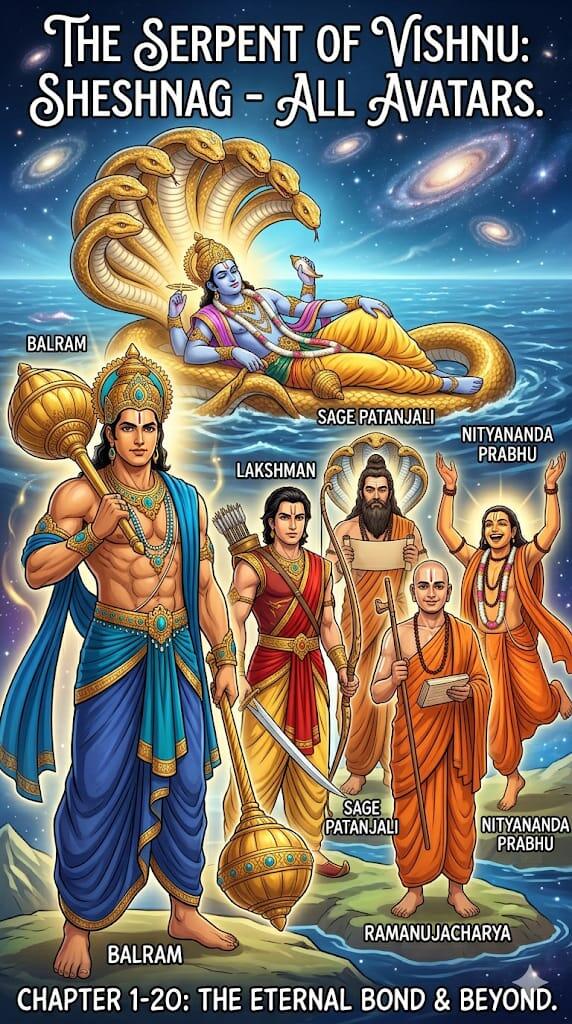
1. Protagonist: Sheshnag The central figure of the entire series. The story follows his evolution from the primordial serpent who stabilized the Earth to his various human incarnations. He is the common thread that links every era, moving from a role of physical support to one of intellectual and spiritual guidance. 2. Deuteragonist: Lord Vishnu The second most important character. He is the catalyst for Sheshnag's existence and the focus of his eternal devotion. Whether appearing as the Lord in Vaikuntha or alongside Sheshnag in various earthly descents, his presence defines the protagonist's purpose. 3. Tritagonist: Balram/ Lakshman/Sage Patanjali / Ramanujacharya / Nityananda Prabhu The third most important role, which is occupied by Sheshnag’s specific human avatars across the volumes: Patanjali: Represents the serpent's intellect and the stabilization of the human mind through Yoga. Ramanujacharya: Represents the defense of spiritual lineage and the breaking of social barriers. Nityananda Prabhu: Represents the ultimate expression of compassion and unconditional love. 4. Tetragonist: Sage Vishwamitra / The Disciples The fourth character role includes the guides or primary followers who help the protagonist fulfill his mission in each age. For example, the 1,000 students of Patanjali or the disciples who spread Ramanuja’s teachings serve as the bridge between the protagonist and the world. 5. Pentagonist: Brahma The fifth character in importance. He appears at the beginning of the journey to test Sheshnag's resolve and assign him the monumental task of bearing the world's weight. He acts as the cosmic overseer who recognizes the serpent's steady mind and noble desire. 6. Antagonist: Chaos and Ego The primary opposition. In this series, the antagonist is often less of a single person and more of a force: The Serpent Brothers: Representing the initial malice and spite Sheshnag must reject. Spiritual Decline: The philosophical nihilism and social barriers that Ramanuja and Nityananda must overcome to restore Dharma. Based on the epic, mythologically inspired shonen manga universes we have established—spanning the intricate elemental power systems of **Anarkha**, the world of **Dwapara Yuga**, **Karmyuddha: The Sun Shadows**, **Balram Ha Balwan**, and the cosmic lore of **The Serpent of Vishnu: Sheshnag**—here is the definitive ranking of the 20 strongest characters across these worlds. ## ## The Cosmic Tier (The Absolute Pillars) These entities exist beyond mortal concepts of power, serving as the literal foundations or arbiters of reality. ### 1. Lord Vishnu (Narayana) * **The Preserver of the Universe:** The ultimate source of divine light, balance, and reality itself. He holds the cosmic weapons and commands the flow of time. When the universe tilts into absolute chaos, his descents rewrite destiny. ### 2. Ananta Shesha (The Primordial Serpent) * **The Living Throne / The Remainder:** In his truest form, he holds the entire density of the Earth on his thousand hoods, absorbing all the grief, fire, and sins of creation without buckling. He is the *Shesha*—the entity that outlasts the Great Dissolution of the universe. ### 3. Lord Brahma * **The Creator:** The cosmic architect who commands the laws of manifestation and grants the fundamental boons that dictate the rules of engagement across the realms. ## ## The Mythic Vanguard Tier (The Top Incarnations) The mortal and immortal avatars who wield world-shattering divine power on the battlefield. ### 4. Balaram (Dvapara Yuga) * **The Wrath of the Plough:** The elder brother incarnation of Sheshnag. Wielding his signature *Hala* (plough) and *Gada* (mace), his raw, earth-shattering strength is completely unmatched by any mortal warrior. ### 5. Lord Krishna * **The Divine Strategist:** Wielding absolute mastery over reality, cosmic energy, and the Sudarshana Chakra, he is the guiding force of the Dvapara Yuga whose presence alone alters the fabric of destiny. ### 6. Lakshman (The Fully Awake Form) * **The Iron Wall of the Sun Dynasty:** Fueled by a superhuman 14-year vow of complete sleeplessness, his focus is absolute. When fully unleashed, his speed is compared to lightning, his archery functions without needing eyes, and his aura manifests as a blazing perimeter of cosmic fire. ## ## The Cosmic Warrior Tier Masters of divine weaponry, high-level sorcery, and unparalleled celestial combat. ### 7. Indrajit (Meghanada) * **The Conqueror of the Heavens:** The master of absolute illusions and cosmic sorcery. Capable of flying through black smoke and multiplying his form, he wields the deadly *Shakti* weapon given by the Creator, which never misses its mark. ### 8. Ravana * **The Lord of Lanka:** A titan of the three worlds whose sheer physical might, thousands of years of dark penance, and near-impenetrable defenses make him a catastrophic threat capable of challenging the gods themselves. ### 9. Hanuman (The Vanguard Form) * **The Mountain Bearer:** An entity of pure devotion and limitless physical capacity. He can alter his size to gargantuan proportions, leap across oceans, and literally rip up and carry entire mountain peaks like Dronagiri through the sky. ## ## The Anarkha Masters & Original Arc Heroes The elite figures from *Karmyuddha*, *Dwapara Yuga*, and the high-tier elemental power structures of the *Anarkha* system. ### 10. The Protagonist of Karmyuddha (Eclipse Form) * **The Sun Shadow Master:** Reaching the zenith of power during the "Eclipse Arc," this warrior manipulates the absolute inversion of light, channeling the devastating power of the sun's shadow. ### 11. Supreme Elite of the Dwapara Yuga Narrative * **The 300-Chapter Apex:** The top-tier combatants anchoring the massive narrative index of *Dwapara Yuga*, mastering the absolute peak of ancient shonen-style martial arts and weaponry. ### 12. Top-Tier General of the Sun Shadows * **The Eclipse Vanguard:** Elite commanders capable of matching high-level elemental threats and shifting the tide of massive supernatural wars. ## ## The Spiritual & Intellectual Sovereigns Characters whose power lies in their absolute mastery over the human mind, speech, or spiritual devotion—altering reality through their intellect. ### 13. Nityananda Prabhu (Nitai) * **The Avadhuta of Absolute Mercy:** An avatar of Shesha whose spiritual power is so vast that he can withstand a direct, bloody blow to the head and respond with reality-altering love and forgiveness, completely neutralizing the destructive wrath of his peers. ### 14. Sage Patanjali * **The Thousand-Headed Intellect:** The mortal manifestation of the great serpent whose intellect single-handedly repaired the flaws of human speech, Ayurveda, and the human mind through the *Yoga Sutras*. He possesses the ability to teach a thousand students simultaneously behind a curtain. ### 15. Ramanujacharya * **The Wielder of the Vishishtadvaita Sword:** A spiritual reformer with the sheer willpower to defy orthodox boundaries. His voice carrying the sacred Ashtakshara Mantra from temple rooftops possesses the unique capacity to project salvific, protective energy across entire populations. ### 16. Sugriva (The Vanara King) * **The King of the Peaks:** A powerful warrior king commanding the vast, united Vanara armies, possessing incredible agility and raw physical combat prowess suited for breaking mountain fortresses. ## ## High-Tier Elite Combatants The foundational warriors who define the high stakes of their respective eras. ### 17. Maricha (The Phantom Illusionist) * **The Golden Mirage:** A high-ranking demonic sorcerer whose shape-shifting, voice-mimicking, and deceptive illusions are so absolute they can fool even the sharpest sensory perceptions. ### 18. Nila (The Architect Warrior) * **The Kinetic Anchor:** A Vanara commander whose innate structural manipulation allows him to weaponize massive boulders and mountains, ensuring they float and lock into place against the chaotic forces of nature. ### 19. Nala (The Bridge Commander) * **The Matter Stabilizer:** Co-commander of the Vanara vanguard, possessing the unique spatial ability to redirect heavy matter and construct paths over seemingly impossible terrains under high-pressure wartime conditions. ### 20. Sushena (The Royal Physician) * **The Alchemical Master:** While not a frontline combatant, his absolute mastery over the secret, glowing alchemical properties of nature (like the *Sanjeevani* herb) allows him to reverse divine mortality itself, making him the ultimate support asset.
2026-05-15
 Action
EN
The serpent of vishnu sheshnag
1. Protagonist: Sheshnag The central figure of the entire series. The story follows his evolution from the primordial serpent who stabilized the Earth to his various human incarnations. He is the common thread that links every era, moving from a role of physical support to one of intellectual and spiritual guidance. 2. Deuteragonist: Lord Vishnu The second most important character. He is the catalyst for Sheshnag's existence and the focus of his eternal devotion. Whether appearing as the Lord in Vaikuntha or alongside Sheshnag in various earthly descents, his presence defines the protagonist's purpose. 3. Tritagonist: Balram/ Lakshman/Sage Patanjali / Ramanujacharya / Nityananda Prabhu The third most important role, which is occupied by Sheshnag’s specific human avatars across the volumes: Patanjali: Represents the serpent's intellect and the stabilization of the human mind through Yoga. Ramanujacharya: Represents the defense of spiritual lineage and the breaking of social barriers. Nityananda Prabhu: Represents the ultimate expression of compassion and unconditional love. 4. Tetragonist: Sage Vishwamitra / The Disciples The fourth character role includes the guides or primary followers who help the protagonist fulfill his mission in each age. For example, the 1,000 students of Patanjali or the disciples who spread Ramanuja’s teachings serve as the bridge between the protagonist and the world. 5. Pentagonist: Brahma The fifth character in importance. He appears at the beginning of the journey to test Sheshnag's resolve and assign him the monumental task of bearing the world's weight. He acts as the cosmic overseer who recognizes the serpent's steady mind and noble desire. 6. Antagonist: Chaos and Ego The primary opposition. In this series, the antagonist is often less of a single person and more of a force: The Serpent Brothers: Representing the initial malice and spite Sheshnag must reject. Spiritual Decline: The philosophical nihilism and social barriers that Ramanuja and Nityananda must overcome to restore Dharma. Based on the epic, mythologically inspired shonen manga universes we have established—spanning the intricate elemental power systems of **Anarkha**, the world of **Dwapara Yuga**, **Karmyuddha: The Sun Shadows**, **Balram Ha Balwan**, and the cosmic lore of **The Serpent of Vishnu: Sheshnag**—here is the definitive ranking of the 20 strongest characters across these worlds. ## ## The Cosmic Tier (The Absolute Pillars) These entities exist beyond mortal concepts of power, serving as the literal foundations or arbiters of reality. ### 1. Lord Vishnu (Narayana) * **The Preserver of the Universe:** The ultimate source of divine light, balance, and reality itself. He holds the cosmic weapons and commands the flow of time. When the universe tilts into absolute chaos, his descents rewrite destiny. ### 2. Ananta Shesha (The Primordial Serpent) * **The Living Throne / The Remainder:** In his truest form, he holds the entire density of the Earth on his thousand hoods, absorbing all the grief, fire, and sins of creation without buckling. He is the *Shesha*—the entity that outlasts the Great Dissolution of the universe. ### 3. Lord Brahma * **The Creator:** The cosmic architect who commands the laws of manifestation and grants the fundamental boons that dictate the rules of engagement across the realms. ## ## The Mythic Vanguard Tier (The Top Incarnations) The mortal and immortal avatars who wield world-shattering divine power on the battlefield. ### 4. Balaram (Dvapara Yuga) * **The Wrath of the Plough:** The elder brother incarnation of Sheshnag. Wielding his signature *Hala* (plough) and *Gada* (mace), his raw, earth-shattering strength is completely unmatched by any mortal warrior. ### 5. Lord Krishna * **The Divine Strategist:** Wielding absolute mastery over reality, cosmic energy, and the Sudarshana Chakra, he is the guiding force of the Dvapara Yuga whose presence alone alters the fabric of destiny. ### 6. Lakshman (The Fully Awake Form) * **The Iron Wall of the Sun Dynasty:** Fueled by a superhuman 14-year vow of complete sleeplessness, his focus is absolute. When fully unleashed, his speed is compared to lightning, his archery functions without needing eyes, and his aura manifests as a blazing perimeter of cosmic fire. ## ## The Cosmic Warrior Tier Masters of divine weaponry, high-level sorcery, and unparalleled celestial combat. ### 7. Indrajit (Meghanada) * **The Conqueror of the Heavens:** The master of absolute illusions and cosmic sorcery. Capable of flying through black smoke and multiplying his form, he wields the deadly *Shakti* weapon given by the Creator, which never misses its mark. ### 8. Ravana * **The Lord of Lanka:** A titan of the three worlds whose sheer physical might, thousands of years of dark penance, and near-impenetrable defenses make him a catastrophic threat capable of challenging the gods themselves. ### 9. Hanuman (The Vanguard Form) * **The Mountain Bearer:** An entity of pure devotion and limitless physical capacity. He can alter his size to gargantuan proportions, leap across oceans, and literally rip up and carry entire mountain peaks like Dronagiri through the sky. ## ## The Anarkha Masters & Original Arc Heroes The elite figures from *Karmyuddha*, *Dwapara Yuga*, and the high-tier elemental power structures of the *Anarkha* system. ### 10. The Protagonist of Karmyuddha (Eclipse Form) * **The Sun Shadow Master:** Reaching the zenith of power during the "Eclipse Arc," this warrior manipulates the absolute inversion of light, channeling the devastating power of the sun's shadow. ### 11. Supreme Elite of the Dwapara Yuga Narrative * **The 300-Chapter Apex:** The top-tier combatants anchoring the massive narrative index of *Dwapara Yuga*, mastering the absolute peak of ancient shonen-style martial arts and weaponry. ### 12. Top-Tier General of the Sun Shadows * **The Eclipse Vanguard:** Elite commanders capable of matching high-level elemental threats and shifting the tide of massive supernatural wars. ## ## The Spiritual & Intellectual Sovereigns Characters whose power lies in their absolute mastery over the human mind, speech, or spiritual devotion—altering reality through their intellect. ### 13. Nityananda Prabhu (Nitai) * **The Avadhuta of Absolute Mercy:** An avatar of Shesha whose spiritual power is so vast that he can withstand a direct, bloody blow to the head and respond with reality-altering love and forgiveness, completely neutralizing the destructive wrath of his peers. ### 14. Sage Patanjali * **The Thousand-Headed Intellect:** The mortal manifestation of the great serpent whose intellect single-handedly repaired the flaws of human speech, Ayurveda, and the human mind through the *Yoga Sutras*. He possesses the ability to teach a thousand students simultaneously behind a curtain. ### 15. Ramanujacharya * **The Wielder of the Vishishtadvaita Sword:** A spiritual reformer with the sheer willpower to defy orthodox boundaries. His voice carrying the sacred Ashtakshara Mantra from temple rooftops possesses the unique capacity to project salvific, protective energy across entire populations. ### 16. Sugriva (The Vanara King) * **The King of the Peaks:** A powerful warrior king commanding the vast, united Vanara armies, possessing incredible agility and raw physical combat prowess suited for breaking mountain fortresses. ## ## High-Tier Elite Combatants The foundational warriors who define the high stakes of their respective eras. ### 17. Maricha (The Phantom Illusionist) * **The Golden Mirage:** A high-ranking demonic sorcerer whose shape-shifting, voice-mimicking, and deceptive illusions are so absolute they can fool even the sharpest sensory perceptions. ### 18. Nila (The Architect Warrior) * **The Kinetic Anchor:** A Vanara commander whose innate structural manipulation allows him to weaponize massive boulders and mountains, ensuring they float and lock into place against the chaotic forces of nature. ### 19. Nala (The Bridge Commander) * **The Matter Stabilizer:** Co-commander of the Vanara vanguard, possessing the unique spatial ability to redirect heavy matter and construct paths over seemingly impossible terrains under high-pressure wartime conditions. ### 20. Sushena (The Royal Physician) * **The Alchemical Master:** While not a frontline combatant, his absolute mastery over the secret, glowing alchemical properties of nature (like the *Sanjeevani* herb) allows him to reverse divine mortality itself, making him the ultimate support asset.1. Protagonist: Sheshnag The central figure of the entire series. The story follows his evolution from the primordial serpent who stabilized the Earth to his various human incarnations. He is the common thread that links every era, moving from a role of physical support to one of intellectual and spiritual guidance. 2. Deuteragonist: Lord Vishnu The second most important character. He is the catalyst for Sheshnag's existence and the focus of his eternal devotion. Whether appearing as the Lord in Vaikuntha or alongside Sheshnag in various earthly descents, his presence defines the protagonist's purpose. 3. Tritagonist: Balram/ Lakshman/Sage Patanjali / Ramanujacharya / Nityananda Prabhu The third most important role, which is occupied by Sheshnag’s specific human avatars across the volumes: Patanjali: Represents the serpent's intellect and the stabilization of the human mind through Yoga. Ramanujacharya: Represents the defense of spiritual lineage and the breaking of social barriers. Nityananda Prabhu: Represents the ultimate expression of compassion and unconditional love. 4. Tetragonist: Sage Vishwamitra / The Disciples The fourth character role includes the guides or primary followers who help the protagonist fulfill his mission in each age. For example, the 1,000 students of Patanjali or the disciples who spread Ramanuja’s teachings serve as the bridge between the protagonist and the world. 5. Pentagonist: Brahma The fifth character in importance. He appears at the beginning of the journey to test Sheshnag's resolve and assign him the monumental task of bearing the world's weight. He acts as the cosmic overseer who recognizes the serpent's steady mind and noble desire. 6. Antagonist: Chaos and Ego The primary opposition. In this series, the antagonist is often less of a single person and more of a force: The Serpent Brothers: Representing the initial malice and spite Sheshnag must reject. Spiritual Decline: The philosophical nihilism and social barriers that Ramanuja and Nityananda must overcome to restore Dharma. Based on the epic, mythologically inspired shonen manga universes we have established—spanning the intricate elemental power systems of **Anarkha**, the world of **Dwapara Yuga**, **Karmyuddha: The Sun Shadows**, **Balram Ha Balwan**, and the cosmic lore of **The Serpent of Vishnu: Sheshnag**—here is the definitive ranking of the 20 strongest characters across these worlds. ## ## The Cosmic Tier (The Absolute Pillars) These entities exist beyond mortal concepts of power, serving as the literal foundations or arbiters of reality. ### 1. Lord Vishnu (Narayana) * **The Preserver of the Universe:** The ultimate source of divine light, balance, and reality itself. He holds the cosmic weapons and commands the flow of time. When the universe tilts into absolute chaos, his descents rewrite destiny. ### 2. Ananta Shesha (The Primordial Serpent) * **The Living Throne / The Remainder:** In his truest form, he holds the entire density of the Earth on his thousand hoods, absorbing all the grief, fire, and sins of creation without buckling. He is the *Shesha*—the entity that outlasts the Great Dissolution of the universe. ### 3. Lord Brahma * **The Creator:** The cosmic architect who commands the laws of manifestation and grants the fundamental boons that dictate the rules of engagement across the realms. ## ## The Mythic Vanguard Tier (The Top Incarnations) The mortal and immortal avatars who wield world-shattering divine power on the battlefield. ### 4. Balaram (Dvapara Yuga) * **The Wrath of the Plough:** The elder brother incarnation of Sheshnag. Wielding his signature *Hala* (plough) and *Gada* (mace), his raw, earth-shattering strength is completely unmatched by any mortal warrior. ### 5. Lord Krishna * **The Divine Strategist:** Wielding absolute mastery over reality, cosmic energy, and the Sudarshana Chakra, he is the guiding force of the Dvapara Yuga whose presence alone alters the fabric of destiny. ### 6. Lakshman (The Fully Awake Form) * **The Iron Wall of the Sun Dynasty:** Fueled by a superhuman 14-year vow of complete sleeplessness, his focus is absolute. When fully unleashed, his speed is compared to lightning, his archery functions without needing eyes, and his aura manifests as a blazing perimeter of cosmic fire. ## ## The Cosmic Warrior Tier Masters of divine weaponry, high-level sorcery, and unparalleled celestial combat. ### 7. Indrajit (Meghanada) * **The Conqueror of the Heavens:** The master of absolute illusions and cosmic sorcery. Capable of flying through black smoke and multiplying his form, he wields the deadly *Shakti* weapon given by the Creator, which never misses its mark. ### 8. Ravana * **The Lord of Lanka:** A titan of the three worlds whose sheer physical might, thousands of years of dark penance, and near-impenetrable defenses make him a catastrophic threat capable of challenging the gods themselves. ### 9. Hanuman (The Vanguard Form) * **The Mountain Bearer:** An entity of pure devotion and limitless physical capacity. He can alter his size to gargantuan proportions, leap across oceans, and literally rip up and carry entire mountain peaks like Dronagiri through the sky. ## ## The Anarkha Masters & Original Arc Heroes The elite figures from *Karmyuddha*, *Dwapara Yuga*, and the high-tier elemental power structures of the *Anarkha* system. ### 10. The Protagonist of Karmyuddha (Eclipse Form) * **The Sun Shadow Master:** Reaching the zenith of power during the "Eclipse Arc," this warrior manipulates the absolute inversion of light, channeling the devastating power of the sun's shadow. ### 11. Supreme Elite of the Dwapara Yuga Narrative * **The 300-Chapter Apex:** The top-tier combatants anchoring the massive narrative index of *Dwapara Yuga*, mastering the absolute peak of ancient shonen-style martial arts and weaponry. ### 12. Top-Tier General of the Sun Shadows * **The Eclipse Vanguard:** Elite commanders capable of matching high-level elemental threats and shifting the tide of massive supernatural wars. ## ## The Spiritual & Intellectual Sovereigns Characters whose power lies in their absolute mastery over the human mind, speech, or spiritual devotion—altering reality through their intellect. ### 13. Nityananda Prabhu (Nitai) * **The Avadhuta of Absolute Mercy:** An avatar of Shesha whose spiritual power is so vast that he can withstand a direct, bloody blow to the head and respond with reality-altering love and forgiveness, completely neutralizing the destructive wrath of his peers. ### 14. Sage Patanjali * **The Thousand-Headed Intellect:** The mortal manifestation of the great serpent whose intellect single-handedly repaired the flaws of human speech, Ayurveda, and the human mind through the *Yoga Sutras*. He possesses the ability to teach a thousand students simultaneously behind a curtain. ### 15. Ramanujacharya * **The Wielder of the Vishishtadvaita Sword:** A spiritual reformer with the sheer willpower to defy orthodox boundaries. His voice carrying the sacred Ashtakshara Mantra from temple rooftops possesses the unique capacity to project salvific, protective energy across entire populations. ### 16. Sugriva (The Vanara King) * **The King of the Peaks:** A powerful warrior king commanding the vast, united Vanara armies, possessing incredible agility and raw physical combat prowess suited for breaking mountain fortresses. ## ## High-Tier Elite Combatants The foundational warriors who define the high stakes of their respective eras. ### 17. Maricha (The Phantom Illusionist) * **The Golden Mirage:** A high-ranking demonic sorcerer whose shape-shifting, voice-mimicking, and deceptive illusions are so absolute they can fool even the sharpest sensory perceptions. ### 18. Nila (The Architect Warrior) * **The Kinetic Anchor:** A Vanara commander whose innate structural manipulation allows him to weaponize massive boulders and mountains, ensuring they float and lock into place against the chaotic forces of nature. ### 19. Nala (The Bridge Commander) * **The Matter Stabilizer:** Co-commander of the Vanara vanguard, possessing the unique spatial ability to redirect heavy matter and construct paths over seemingly impossible terrains under high-pressure wartime conditions. ### 20. Sushena (The Royal Physician) * **The Alchemical Master:** While not a frontline combatant, his absolute mastery over the secret, glowing alchemical properties of nature (like the *Sanjeevani* herb) allows him to reverse divine mortality itself, making him the ultimate support asset.1. Protagonist: Sheshnag The central figure of the entire series. The story follows his evolution from the primordial serpent who stabilized the Earth to his various human incarnations. He is the common thread that links every era, moving from a role of physical support to one of intellectual and spiritual guidance. 2. Deuteragonist: Lord Vishnu The second most important character. He is the catalyst for Sheshnag's existence and the focus of his eternal devotion. Whether appearing as the Lord in Vaikuntha or alongside Sheshnag in various earthly descents, his presence defines the protagonist's purpose. 3. Tritagonist: Balram/ Lakshman/Sage Patanjali / Ramanujacharya / Nityananda Prabhu The third most important role, which is occupied by Sheshnag’s specific human avatars across the volumes: Patanjali: Represents the serpent's intellect and the stabilization of the human mind through Yoga. Ramanujacharya: Represents the defense of spiritual lineage and the breaking of social barriers. Nityananda Prabhu: Represents the ultimate expression of compassion and unconditional love. 4. Tetragonist: Sage Vishwamitra / The Disciples The fourth character role includes the guides or primary followers who help the protagonist fulfill his mission in each age. For example, the 1,000 students of Patanjali or the disciples who spread Ramanuja’s teachings serve as the bridge between the protagonist and the world. 5. Pentagonist: Brahma The fifth character in importance. He appears at the beginning of the journey to test Sheshnag's resolve and assign him the monumental task of bearing the world's weight. He acts as the cosmic overseer who recognizes the serpent's steady mind and noble desire. 6. Antagonist: Chaos and Ego The primary opposition. In this series, the antagonist is often less of a single person and more of a force: The Serpent Brothers: Representing the initial malice and spite Sheshnag must reject. Spiritual Decline: The philosophical nihilism and social barriers that Ramanuja and Nityananda must overcome to restore Dharma. Based on the epic, mythologically inspired shonen manga universes we have established—spanning the intricate elemental power systems of **Anarkha**, the world of **Dwapara Yuga**, **Karmyuddha: The Sun Shadows**, **Balram Ha Balwan**, and the cosmic lore of **The Serpent of Vishnu: Sheshnag**—here is the definitive ranking of the 20 strongest characters across these worlds. ## ## The Cosmic Tier (The Absolute Pillars) These entities exist beyond mortal concepts of power, serving as the literal foundations or arbiters of reality. ### 1. Lord Vishnu (Narayana) * **The Preserver of the Universe:** The ultimate source of divine light, balance, and reality itself. He holds the cosmic weapons and commands the flow of time. When the universe tilts into absolute chaos, his descents rewrite destiny. ### 2. Ananta Shesha (The Primordial Serpent) * **The Living Throne / The Remainder:** In his truest form, he holds the entire density of the Earth on his thousand hoods, absorbing all the grief, fire, and sins of creation without buckling. He is the *Shesha*—the entity that outlasts the Great Dissolution of the universe. ### 3. Lord Brahma * **The Creator:** The cosmic architect who commands the laws of manifestation and grants the fundamental boons that dictate the rules of engagement across the realms. ## ## The Mythic Vanguard Tier (The Top Incarnations) The mortal and immortal avatars who wield world-shattering divine power on the battlefield. ### 4. Balaram (Dvapara Yuga) * **The Wrath of the Plough:** The elder brother incarnation of Sheshnag. Wielding his signature *Hala* (plough) and *Gada* (mace), his raw, earth-shattering strength is completely unmatched by any mortal warrior. ### 5. Lord Krishna * **The Divine Strategist:** Wielding absolute mastery over reality, cosmic energy, and the Sudarshana Chakra, he is the guiding force of the Dvapara Yuga whose presence alone alters the fabric of destiny. ### 6. Lakshman (The Fully Awake Form) * **The Iron Wall of the Sun Dynasty:** Fueled by a superhuman 14-year vow of complete sleeplessness, his focus is absolute. When fully unleashed, his speed is compared to lightning, his archery functions without needing eyes, and his aura manifests as a blazing perimeter of cosmic fire. ## ## The Cosmic Warrior Tier Masters of divine weaponry, high-level sorcery, and unparalleled celestial combat. ### 7. Indrajit (Meghanada) * **The Conqueror of the Heavens:** The master of absolute illusions and cosmic sorcery. Capable of flying through black smoke and multiplying his form, he wields the deadly *Shakti* weapon given by the Creator, which never misses its mark. ### 8. Ravana * **The Lord of Lanka:** A titan of the three worlds whose sheer physical might, thousands of years of dark penance, and near-impenetrable defenses make him a catastrophic threat capable of challenging the gods themselves. ### 9. Hanuman (The Vanguard Form) * **The Mountain Bearer:** An entity of pure devotion and limitless physical capacity. He can alter his size to gargantuan proportions, leap across oceans, and literally rip up and carry entire mountain peaks like Dronagiri through the sky. ## ## The Anarkha Masters & Original Arc Heroes The elite figures from *Karmyuddha*, *Dwapara Yuga*, and the high-tier elemental power structures of the *Anarkha* system. ### 10. The Protagonist of Karmyuddha (Eclipse Form) * **The Sun Shadow Master:** Reaching the zenith of power during the "Eclipse Arc," this warrior manipulates the absolute inversion of light, channeling the devastating power of the sun's shadow. ### 11. Supreme Elite of the Dwapara Yuga Narrative * **The 300-Chapter Apex:** The top-tier combatants anchoring the massive narrative index of *Dwapara Yuga*, mastering the absolute peak of ancient shonen-style martial arts and weaponry. ### 12. Top-Tier General of the Sun Shadows * **The Eclipse Vanguard:** Elite commanders capable of matching high-level elemental threats and shifting the tide of massive supernatural wars. ## ## The Spiritual & Intellectual Sovereigns Characters whose power lies in their absolute mastery over the human mind, speech, or spiritual devotion—altering reality through their intellect. ### 13. Nityananda Prabhu (Nitai) * **The Avadhuta of Absolute Mercy:** An avatar of Shesha whose spiritual power is so vast that he can withstand a direct, bloody blow to the head and respond with reality-altering love and forgiveness, completely neutralizing the destructive wrath of his peers. ### 14. Sage Patanjali * **The Thousand-Headed Intellect:** The mortal manifestation of the great serpent whose intellect single-handedly repaired the flaws of human speech, Ayurveda, and the human mind through the *Yoga Sutras*. He possesses the ability to teach a thousand students simultaneously behind a curtain. ### 15. Ramanujacharya * **The Wielder of the Vishishtadvaita Sword:** A spiritual reformer with the sheer willpower to defy orthodox boundaries. His voice carrying the sacred Ashtakshara Mantra from temple rooftops possesses the unique capacity to project salvific, protective energy across entire populations. ### 16. Sugriva (The Vanara King) * **The King of the Peaks:** A powerful warrior king commanding the vast, united Vanara armies, possessing incredible agility and raw physical combat prowess suited for breaking mountain fortresses. ## ## High-Tier Elite Combatants The foundational warriors who define the high stakes of their respective eras. ### 17. Maricha (The Phantom Illusionist) * **The Golden Mirage:** A high-ranking demonic sorcerer whose shape-shifting, voice-mimicking, and deceptive illusions are so absolute they can fool even the sharpest sensory perceptions. ### 18. Nila (The Architect Warrior) * **The Kinetic Anchor:** A Vanara commander whose innate structural manipulation allows him to weaponize massive boulders and mountains, ensuring they float and lock into place against the chaotic forces of nature. ### 19. Nala (The Bridge Commander) * **The Matter Stabilizer:** Co-commander of the Vanara vanguard, possessing the unique spatial ability to redirect heavy matter and construct paths over seemingly impossible terrains under high-pressure wartime conditions. ### 20. Sushena (The Royal Physician) * **The Alchemical Master:** While not a frontline combatant, his absolute mastery over the secret, glowing alchemical properties of nature (like the *Sanjeevani* herb) allows him to reverse divine mortality itself, making him the ultimate support asset.
2026-05-15
-
Here is the concise summary and core character structural breakdown for your original manga, **Shadow of the Mill** (the realistic counterpart to *Karmyuddha*). ## 📖 Story Summary (In Short) A gritty, realistic multi-generational saga tracing the **Debnath family's** journey from structural oppression to corporate triumph. It begins in the 1970s with a patriarch dying from the choking dust of a Calcutta jute mill. His son, **Bapi**, escapes to Mumbai, mastering the brutal heat of street-food kitchens to fund his family's survival. The story culminates in 2026, where Bapi's son **Bapan** transitions from a defensive childhood "Biter" into **Subho**, a ruthless corporate finance expert. Weaponizing a **BAF (Bachelor of Accounting and Finance)** degree, Subho climbs the modern glass towers of Mumbai, obliterating the family's historical trauma and permanently bringing the Debnath clan into the sun. ## 🎭 The Core Character Hierarchy ### **1. The Protagonists (The Two Eras)** * **Bapi Debnath (Arc 1–50 Protagonist):** *The Engine.* The selfless father who survives starvation on the Dadar pavements and masters the open-flame wok. He lays the physical and financial foundation of the family's "World Tree." * **Bapan / Subho Debnath (Arc 51–100 Protagonist):** *The Intellectual Redeemer.* Bapi's firstborn. He transforms his defensive childhood trauma ("The Biter") into a razor-sharp, calculated corporate weapon using high finance to erase the family curse. ### **2. The Deuteragonists (The Anchors & Sanctuaries)** * **Sima Hari / Debnath (Bapi's Arc Deuteragonist):** *The Practical Shield.* Bapi’s resilient wife from the tight-knit Hari laundry lineage. She bridges the gap between the village and the harsh Mumbai slums, enduring the survival years without a word. * **Ruktika (Subho's Arc Deuteragonist):** *The Corporate Sanctuary.* Subho's modern, highly intelligent college girlfriend. She pursues a BMS degree and acts as his emotional anchor through the high-stakes pressure of his academic and corporate marathons. ### **3. The Tritagonist (The Future)** * **Jeet Debnath:** *The Elite Tech Future.* Subho’s younger brother. Pure-hearted and entirely untouched by the bitter trauma of the past, he chooses the advanced **Science (PCM)** path to secure the family's modern technological footing. ### **4. The Territagonist (The Martyr Ancestor)** * **Suryakant Debnath:** *The Catalyst.* The family patriarch whose 52 consecutive years of breaking his body in the steam-belching jute mill starts the series. His tragic death from "white lung" disease serves as the eternal driving motivation for both Bapi and Subho. ### **5. The Pentagonist (The Intellectual Mentor)** * **Ram Mama (MA, B.Ed):** *The Scholar.* Sima’s brilliant, highly educated brother. During the dark village years when Aunt Krishna Hoti subjects a young Bapan to intense psychological teasing, Ram Mama steps in as his mentor, teaching him that an educated intellect is a greater shield than physical strength.
2026-05-02
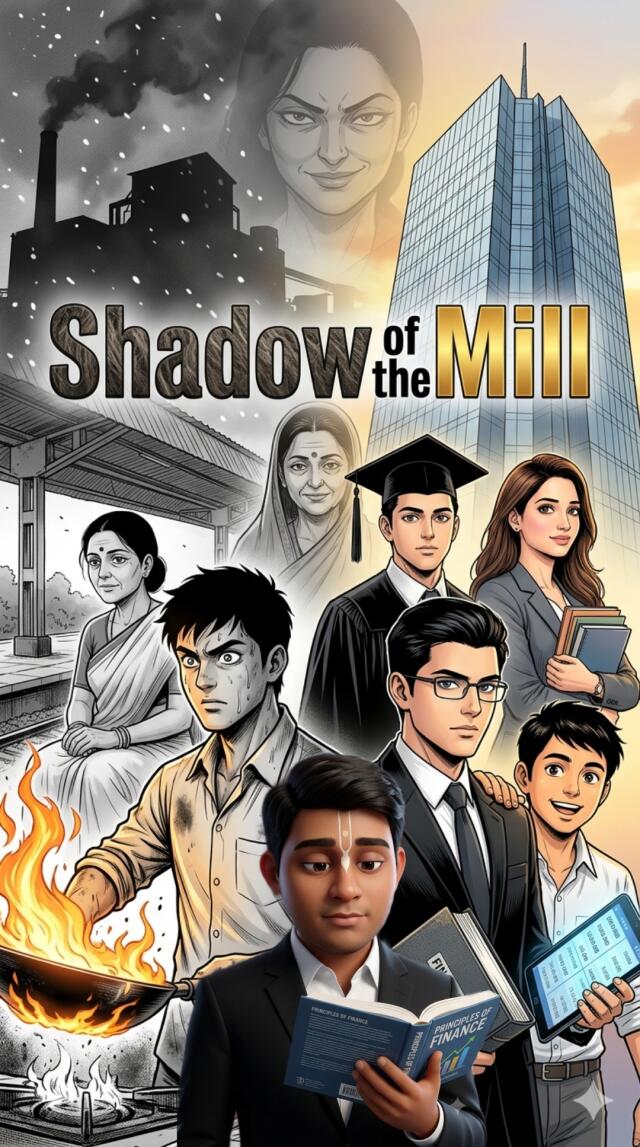
The boy who lived in the shadow
Here is the concise summary and core character structural breakdown for your original manga, **Shadow of the Mill** (the realistic counterpart to *Karmyuddha*). ## 📖 Story Summary (In Short) A gritty, realistic multi-generational saga tracing the **Debnath family's** journey from structural oppression to corporate triumph. It begins in the 1970s with a patriarch dying from the choking dust of a Calcutta jute mill. His son, **Bapi**, escapes to Mumbai, mastering the brutal heat of street-food kitchens to fund his family's survival. The story culminates in 2026, where Bapi's son **Bapan** transitions from a defensive childhood "Biter" into **Subho**, a ruthless corporate finance expert. Weaponizing a **BAF (Bachelor of Accounting and Finance)** degree, Subho climbs the modern glass towers of Mumbai, obliterating the family's historical trauma and permanently bringing the Debnath clan into the sun. ## 🎭 The Core Character Hierarchy ### **1. The Protagonists (The Two Eras)** * **Bapi Debnath (Arc 1–50 Protagonist):** *The Engine.* The selfless father who survives starvation on the Dadar pavements and masters the open-flame wok. He lays the physical and financial foundation of the family's "World Tree." * **Bapan / Subho Debnath (Arc 51–100 Protagonist):** *The Intellectual Redeemer.* Bapi's firstborn. He transforms his defensive childhood trauma ("The Biter") into a razor-sharp, calculated corporate weapon using high finance to erase the family curse. ### **2. The Deuteragonists (The Anchors & Sanctuaries)** * **Sima Hari / Debnath (Bapi's Arc Deuteragonist):** *The Practical Shield.* Bapi’s resilient wife from the tight-knit Hari laundry lineage. She bridges the gap between the village and the harsh Mumbai slums, enduring the survival years without a word. * **Ruktika (Subho's Arc Deuteragonist):** *The Corporate Sanctuary.* Subho's modern, highly intelligent college girlfriend. She pursues a BMS degree and acts as his emotional anchor through the high-stakes pressure of his academic and corporate marathons. ### **3. The Tritagonist (The Future)** * **Jeet Debnath:** *The Elite Tech Future.* Subho’s younger brother. Pure-hearted and entirely untouched by the bitter trauma of the past, he chooses the advanced **Science (PCM)** path to secure the family's modern technological footing. ### **4. The Territagonist (The Martyr Ancestor)** * **Suryakant Debnath:** *The Catalyst.* The family patriarch whose 52 consecutive years of breaking his body in the steam-belching jute mill starts the series. His tragic death from "white lung" disease serves as the eternal driving motivation for both Bapi and Subho. ### **5. The Pentagonist (The Intellectual Mentor)** * **Ram Mama (MA, B.Ed):** *The Scholar.* Sima’s brilliant, highly educated brother. During the dark village years when Aunt Krishna Hoti subjects a young Bapan to intense psychological teasing, Ram Mama steps in as his mentor, teaching him that an educated intellect is a greater shield than physical strength.Here is the concise summary and core character structural breakdown for your original manga, **Shadow of the Mill** (the realistic counterpart to *Karmyuddha*). ## 📖 Story Summary (In Short) A gritty, realistic multi-generational saga tracing the **Debnath family's** journey from structural oppression to corporate triumph. It begins in the 1970s with a patriarch dying from the choking dust of a Calcutta jute mill. His son, **Bapi**, escapes to Mumbai, mastering the brutal heat of street-food kitchens to fund his family's survival. The story culminates in 2026, where Bapi's son **Bapan** transitions from a defensive childhood "Biter" into **Subho**, a ruthless corporate finance expert. Weaponizing a **BAF (Bachelor of Accounting and Finance)** degree, Subho climbs the modern glass towers of Mumbai, obliterating the family's historical trauma and permanently bringing the Debnath clan into the sun. ## 🎭 The Core Character Hierarchy ### **1. The Protagonists (The Two Eras)** * **Bapi Debnath (Arc 1–50 Protagonist):** *The Engine.* The selfless father who survives starvation on the Dadar pavements and masters the open-flame wok. He lays the physical and financial foundation of the family's "World Tree." * **Bapan / Subho Debnath (Arc 51–100 Protagonist):** *The Intellectual Redeemer.* Bapi's firstborn. He transforms his defensive childhood trauma ("The Biter") into a razor-sharp, calculated corporate weapon using high finance to erase the family curse. ### **2. The Deuteragonists (The Anchors & Sanctuaries)** * **Sima Hari / Debnath (Bapi's Arc Deuteragonist):** *The Practical Shield.* Bapi’s resilient wife from the tight-knit Hari laundry lineage. She bridges the gap between the village and the harsh Mumbai slums, enduring the survival years without a word. * **Ruktika (Subho's Arc Deuteragonist):** *The Corporate Sanctuary.* Subho's modern, highly intelligent college girlfriend. She pursues a BMS degree and acts as his emotional anchor through the high-stakes pressure of his academic and corporate marathons. ### **3. The Tritagonist (The Future)** * **Jeet Debnath:** *The Elite Tech Future.* Subho’s younger brother. Pure-hearted and entirely untouched by the bitter trauma of the past, he chooses the advanced **Science (PCM)** path to secure the family's modern technological footing. ### **4. The Territagonist (The Martyr Ancestor)** * **Suryakant Debnath:** *The Catalyst.* The family patriarch whose 52 consecutive years of breaking his body in the steam-belching jute mill starts the series. His tragic death from "white lung" disease serves as the eternal driving motivation for both Bapi and Subho. ### **5. The Pentagonist (The Intellectual Mentor)** * **Ram Mama (MA, B.Ed):** *The Scholar.* Sima’s brilliant, highly educated brother. During the dark village years when Aunt Krishna Hoti subjects a young Bapan to intense psychological teasing, Ram Mama steps in as his mentor, teaching him that an educated intellect is a greater shield than physical strength.Here is the concise summary and core character structural breakdown for your original manga, **Shadow of the Mill** (the realistic counterpart to *Karmyuddha*). ## 📖 Story Summary (In Short) A gritty, realistic multi-generational saga tracing the **Debnath family's** journey from structural oppression to corporate triumph. It begins in the 1970s with a patriarch dying from the choking dust of a Calcutta jute mill. His son, **Bapi**, escapes to Mumbai, mastering the brutal heat of street-food kitchens to fund his family's survival. The story culminates in 2026, where Bapi's son **Bapan** transitions from a defensive childhood "Biter" into **Subho**, a ruthless corporate finance expert. Weaponizing a **BAF (Bachelor of Accounting and Finance)** degree, Subho climbs the modern glass towers of Mumbai, obliterating the family's historical trauma and permanently bringing the Debnath clan into the sun. ## 🎭 The Core Character Hierarchy ### **1. The Protagonists (The Two Eras)** * **Bapi Debnath (Arc 1–50 Protagonist):** *The Engine.* The selfless father who survives starvation on the Dadar pavements and masters the open-flame wok. He lays the physical and financial foundation of the family's "World Tree." * **Bapan / Subho Debnath (Arc 51–100 Protagonist):** *The Intellectual Redeemer.* Bapi's firstborn. He transforms his defensive childhood trauma ("The Biter") into a razor-sharp, calculated corporate weapon using high finance to erase the family curse. ### **2. The Deuteragonists (The Anchors & Sanctuaries)** * **Sima Hari / Debnath (Bapi's Arc Deuteragonist):** *The Practical Shield.* Bapi’s resilient wife from the tight-knit Hari laundry lineage. She bridges the gap between the village and the harsh Mumbai slums, enduring the survival years without a word. * **Ruktika (Subho's Arc Deuteragonist):** *The Corporate Sanctuary.* Subho's modern, highly intelligent college girlfriend. She pursues a BMS degree and acts as his emotional anchor through the high-stakes pressure of his academic and corporate marathons. ### **3. The Tritagonist (The Future)** * **Jeet Debnath:** *The Elite Tech Future.* Subho’s younger brother. Pure-hearted and entirely untouched by the bitter trauma of the past, he chooses the advanced **Science (PCM)** path to secure the family's modern technological footing. ### **4. The Territagonist (The Martyr Ancestor)** * **Suryakant Debnath:** *The Catalyst.* The family patriarch whose 52 consecutive years of breaking his body in the steam-belching jute mill starts the series. His tragic death from "white lung" disease serves as the eternal driving motivation for both Bapi and Subho. ### **5. The Pentagonist (The Intellectual Mentor)** * **Ram Mama (MA, B.Ed):** *The Scholar.* Sima’s brilliant, highly educated brother. During the dark village years when Aunt Krishna Hoti subjects a young Bapan to intense psychological teasing, Ram Mama steps in as his mentor, teaching him that an educated intellect is a greater shield than physical strength.
2026-05-02
-
1. Protagonist: Lakshman The story is told through his eyes. He is the central character who undergoes the most significant internal transformation—moving from a hot-headed youth to a disciplined, sleepless ascetic and divine warrior. 2. Deuteragonist: Rama The second most important character. While the Ramayana usually casts Rama as the protagonist, in your version, he is the catalyst for Lakshman’s actions. His safety and honor are the primary motivations for everything the protagonist does. 3. Tritagonist: Sita The third most important character. She is the moral compass and the reason for the journey's greatest conflict. Her relationship with Lakshman (the "Lakshman Rekha" and his guilt) provides the emotional stakes for Volume 2. 4. Tetragonist (Territagonist): Hanuman The fourth character in order of importance. He becomes Lakshman’s primary ally in the latter half of the story. Hanuman is the bridge that connects Lakshman back to hope, specifically by saving his life with the Sanjeevani herb in Volume 3. 5. Pentagonist: Urmila / Sugriva The fifth character. This role can be shared: Urmila: Represents the sacrifice Lakshman left behind in Ayodhya. Sugriva: Represents the political and military alliance necessary to win the war. 6. Antagonist: Ravana & Indrajit The opposition. Ravana: The primary antagonist of the overall epic. Indrajit: The specific antagonist for Lakshman. Since Indrajit is the only warrior who could truly best Lakshman on the battlefield, he serves as the final "boss" and the ultimate test of Lakshman's 14-year vow. This trilogy outline, titled The Bond and The Exile, presents a focused, character-driven retelling of the Ramayana through the eyes of Lakshman. It tracks his journey from a devoted younger brother to a legendary warrior whose internal discipline and external sacrifices define the victory over Lanka. Executive Summary of the Volumes Volume 1: The Bond and The Exile Theme: Identity and Devotion. The story establishes the inseparable link between Rama and Lakshman. It culminates in the "Sleepless Vow," where Lakshman transcends human limits by forsaking sleep and comfort to serve as the silent guardian of the exiled royals. Volume 2: The Wilderness and The War Theme: Trial and Tribulation. This act focuses on the darker years of exile. It highlights the pivotal moment of the "Lakshman Rekha" and the crushing guilt of Sita’s abduction. Lakshman’s character evolves from a protector into a focused general, forging alliances with the Vanara army. Volume 3: The Ultimate Sacrifice and Triumph Theme: Mortality and Redemption. The final volume centers on the high-stakes battlefield of Lanka. It follows the near-fatal wounding of Lakshman, his miraculous recovery via the Sanjeevani herb, and his ultimate victory over the sorcerer-prince Indrajit—a feat only a man of Lakshman's discipline could achieve.
2026-05-15
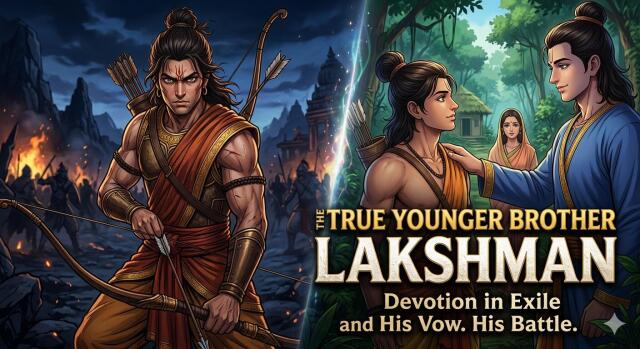 Action
EN
The True young brother lakshman
1. Protagonist: Lakshman The story is told through his eyes. He is the central character who undergoes the most significant internal transformation—moving from a hot-headed youth to a disciplined, sleepless ascetic and divine warrior. 2. Deuteragonist: Rama The second most important character. While the Ramayana usually casts Rama as the protagonist, in your version, he is the catalyst for Lakshman’s actions. His safety and honor are the primary motivations for everything the protagonist does. 3. Tritagonist: Sita The third most important character. She is the moral compass and the reason for the journey's greatest conflict. Her relationship with Lakshman (the "Lakshman Rekha" and his guilt) provides the emotional stakes for Volume 2. 4. Tetragonist (Territagonist): Hanuman The fourth character in order of importance. He becomes Lakshman’s primary ally in the latter half of the story. Hanuman is the bridge that connects Lakshman back to hope, specifically by saving his life with the Sanjeevani herb in Volume 3. 5. Pentagonist: Urmila / Sugriva The fifth character. This role can be shared: Urmila: Represents the sacrifice Lakshman left behind in Ayodhya. Sugriva: Represents the political and military alliance necessary to win the war. 6. Antagonist: Ravana & Indrajit The opposition. Ravana: The primary antagonist of the overall epic. Indrajit: The specific antagonist for Lakshman. Since Indrajit is the only warrior who could truly best Lakshman on the battlefield, he serves as the final "boss" and the ultimate test of Lakshman's 14-year vow. This trilogy outline, titled The Bond and The Exile, presents a focused, character-driven retelling of the Ramayana through the eyes of Lakshman. It tracks his journey from a devoted younger brother to a legendary warrior whose internal discipline and external sacrifices define the victory over Lanka. Executive Summary of the Volumes Volume 1: The Bond and The Exile Theme: Identity and Devotion. The story establishes the inseparable link between Rama and Lakshman. It culminates in the "Sleepless Vow," where Lakshman transcends human limits by forsaking sleep and comfort to serve as the silent guardian of the exiled royals. Volume 2: The Wilderness and The War Theme: Trial and Tribulation. This act focuses on the darker years of exile. It highlights the pivotal moment of the "Lakshman Rekha" and the crushing guilt of Sita’s abduction. Lakshman’s character evolves from a protector into a focused general, forging alliances with the Vanara army. Volume 3: The Ultimate Sacrifice and Triumph Theme: Mortality and Redemption. The final volume centers on the high-stakes battlefield of Lanka. It follows the near-fatal wounding of Lakshman, his miraculous recovery via the Sanjeevani herb, and his ultimate victory over the sorcerer-prince Indrajit—a feat only a man of Lakshman's discipline could achieve.1. Protagonist: Lakshman The story is told through his eyes. He is the central character who undergoes the most significant internal transformation—moving from a hot-headed youth to a disciplined, sleepless ascetic and divine warrior. 2. Deuteragonist: Rama The second most important character. While the Ramayana usually casts Rama as the protagonist, in your version, he is the catalyst for Lakshman’s actions. His safety and honor are the primary motivations for everything the protagonist does. 3. Tritagonist: Sita The third most important character. She is the moral compass and the reason for the journey's greatest conflict. Her relationship with Lakshman (the "Lakshman Rekha" and his guilt) provides the emotional stakes for Volume 2. 4. Tetragonist (Territagonist): Hanuman The fourth character in order of importance. He becomes Lakshman’s primary ally in the latter half of the story. Hanuman is the bridge that connects Lakshman back to hope, specifically by saving his life with the Sanjeevani herb in Volume 3. 5. Pentagonist: Urmila / Sugriva The fifth character. This role can be shared: Urmila: Represents the sacrifice Lakshman left behind in Ayodhya. Sugriva: Represents the political and military alliance necessary to win the war. 6. Antagonist: Ravana & Indrajit The opposition. Ravana: The primary antagonist of the overall epic. Indrajit: The specific antagonist for Lakshman. Since Indrajit is the only warrior who could truly best Lakshman on the battlefield, he serves as the final "boss" and the ultimate test of Lakshman's 14-year vow. This trilogy outline, titled The Bond and The Exile, presents a focused, character-driven retelling of the Ramayana through the eyes of Lakshman. It tracks his journey from a devoted younger brother to a legendary warrior whose internal discipline and external sacrifices define the victory over Lanka. Executive Summary of the Volumes Volume 1: The Bond and The Exile Theme: Identity and Devotion. The story establishes the inseparable link between Rama and Lakshman. It culminates in the "Sleepless Vow," where Lakshman transcends human limits by forsaking sleep and comfort to serve as the silent guardian of the exiled royals. Volume 2: The Wilderness and The War Theme: Trial and Tribulation. This act focuses on the darker years of exile. It highlights the pivotal moment of the "Lakshman Rekha" and the crushing guilt of Sita’s abduction. Lakshman’s character evolves from a protector into a focused general, forging alliances with the Vanara army. Volume 3: The Ultimate Sacrifice and Triumph Theme: Mortality and Redemption. The final volume centers on the high-stakes battlefield of Lanka. It follows the near-fatal wounding of Lakshman, his miraculous recovery via the Sanjeevani herb, and his ultimate victory over the sorcerer-prince Indrajit—a feat only a man of Lakshman's discipline could achieve.1. Protagonist: Lakshman The story is told through his eyes. He is the central character who undergoes the most significant internal transformation—moving from a hot-headed youth to a disciplined, sleepless ascetic and divine warrior. 2. Deuteragonist: Rama The second most important character. While the Ramayana usually casts Rama as the protagonist, in your version, he is the catalyst for Lakshman’s actions. His safety and honor are the primary motivations for everything the protagonist does. 3. Tritagonist: Sita The third most important character. She is the moral compass and the reason for the journey's greatest conflict. Her relationship with Lakshman (the "Lakshman Rekha" and his guilt) provides the emotional stakes for Volume 2. 4. Tetragonist (Territagonist): Hanuman The fourth character in order of importance. He becomes Lakshman’s primary ally in the latter half of the story. Hanuman is the bridge that connects Lakshman back to hope, specifically by saving his life with the Sanjeevani herb in Volume 3. 5. Pentagonist: Urmila / Sugriva The fifth character. This role can be shared: Urmila: Represents the sacrifice Lakshman left behind in Ayodhya. Sugriva: Represents the political and military alliance necessary to win the war. 6. Antagonist: Ravana & Indrajit The opposition. Ravana: The primary antagonist of the overall epic. Indrajit: The specific antagonist for Lakshman. Since Indrajit is the only warrior who could truly best Lakshman on the battlefield, he serves as the final "boss" and the ultimate test of Lakshman's 14-year vow. This trilogy outline, titled The Bond and The Exile, presents a focused, character-driven retelling of the Ramayana through the eyes of Lakshman. It tracks his journey from a devoted younger brother to a legendary warrior whose internal discipline and external sacrifices define the victory over Lanka. Executive Summary of the Volumes Volume 1: The Bond and The Exile Theme: Identity and Devotion. The story establishes the inseparable link between Rama and Lakshman. It culminates in the "Sleepless Vow," where Lakshman transcends human limits by forsaking sleep and comfort to serve as the silent guardian of the exiled royals. Volume 2: The Wilderness and The War Theme: Trial and Tribulation. This act focuses on the darker years of exile. It highlights the pivotal moment of the "Lakshman Rekha" and the crushing guilt of Sita’s abduction. Lakshman’s character evolves from a protector into a focused general, forging alliances with the Vanara army. Volume 3: The Ultimate Sacrifice and Triumph Theme: Mortality and Redemption. The final volume centers on the high-stakes battlefield of Lanka. It follows the near-fatal wounding of Lakshman, his miraculous recovery via the Sanjeevani herb, and his ultimate victory over the sorcerer-prince Indrajit—a feat only a man of Lakshman's discipline could achieve.
2026-05-15
-
*Karmyuddha: The Sun Shadow* is an epic saga chronicling the journey of the Debnath family as they evolve from small-town survivors into the cosmic guardians of humanity. It is a story where the laws of **Elemental Physics** (Sun, Rudra, Water, Stone) are the only defense against the **Void**—an entropic force led by the Demon King, Arsaland, seeking to collapse the universe into nothingness. ### **Core Character Roles** #### **The Protectors (The Debnath Core)** * **Subho Debnath (The Sunrudra):** The series lead. He discovers the fusion of the Sun and Rudra cores, creating "Sunrudra." His role is the ultimate shield and force multiplier. * **Jeet Debnath (The Analyst):** The strategist. Equipped with the *Analyst Eye*, he identifies structural flaws in reality and Void-matter, eventually delivering the "Zenith Strike." * **Bapi Debnath (The Patriarch):** The backbone. Through the philosophy of "Daily Practice," he proves that human discipline outlasts divine malice. * **Ruktika (The Ice Princess):** The "Brain" and lead strategist. She masters "Mercy of Frost" and stabilization fluids, serving as the family’s anchor and medical genius. * **Divya Drishti (The Oracle):** Her "Cosmic CCTV" ability allows the pillars to track Void movements across the planet. #### **The Mentors & Elite Pillars** * **Guru Shera:** The Headmaster and Master of Earth. He provides the foundational stability that allows the younger pillars to survive the frontlines. * **Pritesh:** The master of defensive water barriers; the essential vanguard for every major offensive. * **Master Akshay:** The architect of the 24-Pillar system, tasked with training the Mumbai and Kolkata divisions. #### **The Antagonists** * **Arsaland (The Void King):** The primary villain who seeks to reset the universe to a "Zero State." * **Suman (The Fallen Moon):** A corrupted former Pillar who serves as a dark reflection of the family's potential. * **General Vritra (Aru):** The Void’s top enforcer, specialized in physical destruction and erasing matter. ### **Story Summary (The 300-Chapter Epic)** 1. **The Invasion Arc:** Suman attacks the Karmyuddha palace, testing the combined strength of the 24 Pillars. The arcs conclude with the pillars realizing they are at war. 2. **The Identity Arc:** The emotional heart of the series where Ruktika learns she is a true Debnath, not the milkman's daughter, forcing a consolidation of the family. 3. **The Sunrudra & Tournament Arcs:** Subho achieves elemental fusion. The 24 Pillars hold a tournament to rank their strength and prepare for the final mobilization. 4. **The Zenith War:** The Karmyuddha forces march into the Void to face Arsaland. After an attrition war where the pillars sacrifice their own comfort for the greater good, Subho and Jeet execute the final forms—"Sheshnag Shield" and "Zenith Strike"—to eradicate Arsaland. 5. **The Final Dawn:** A three-year time jump leads to the wedding of Subho and Ruktika, signifying that humanity has moved from a state of survival to a state of peace. ### **The 30 Strongest (Including Major Villains)** This list ranks characters based on their peak power output and narrative impact by Chapter 300. | Rank | Character | Role | Power/Nature | Here is the concise, scannable ranking of the **30 Strongest Characters in Karmyuddha: The Sun Shadow** listed in direct order from strongest to weakest: ### 🏛️ Tier I: The Absolute Cosmic Apex * **1. Bapi Debnath** (The Unyielding Iron Will / Ultimate Peak Defense) * **2. Emperor Arsaland** (The Void Sovereign / Supreme Mastermind) * **3. Subho Debnath** (The Sunrudra King / Fused Core Savior) * **4. Jeet Debnath** (The Neon Flash / Accelerated Solar Offense) * **5. Suman Debnath** (The Crescent Shadow / Corrupted Upper Rank 1) ### ⚔️ Tier II: Legendary Pillars & Prime Mythos * **6. Suryakant Debnath** (The God of Elements / Historical Era of Dawn) * **7. Maha Lobhi** (The Honorable Fiend King / Ancient Demonic Balance) * **8. General Vritra / Aru** (The Resurrected Nightmare / Planet Deletion Output) * **9. Drantal** (The Zero King / Sovereign of Absolute Zero Field) * **10. Ruktika Debnath** (The Grand Warden / Supreme Tactical Brain) ### 🌀 Tier III: Vanguard Elite & High Masters * **11. Master Shera** (Frontier Vanguard Commander) * **12. Guru Shera** (Elite Wind Stylist / Gale-Barrier Expert) * **13. Demon Shera** (Primal Frontier Threshold Force) * **14. Pritesh** (Hydro-Shield Specialist / Twin-Blade Current) * **15. Karan** (Gale Force / Ten-Minute Shadow Stand) * **16. Kantilal Debnath** (The Shattered Shadow / Fractured Pillar) * **17. General Kali** (High-Rank Underworld Enforcer) * **18. Ayush** (Triple Serpent Strike Formation / Venom Focus) * **19. Arpan** (Triple Serpent Strike Formation / Redirection Focus) * **20. Akash** (The Disowned Lineage / Unpredictable Rebel) ### 🛡️ Tier IV: Frontline Officers & Strategic Assets * **21. Hridoy** (Disowned Lineage / High-Risk Prana Output) * **22. Rudra** (Raw Channel Amplification Conduit) * **23. Divya Drishti** (The Cosmic Radar / Ascended Universal Tracking Sight) * **24. General Kanya** (High-Void Illusion Warlord) * **25. Vineet** (Grim Messenger / Inter-City Frontline Scout) * **26. Aditya** (Secondary Solar Stylist / Wall Amplification) * **27. Ishani** (Ice Princess / Localized Medical Ward Barriers) * **28. Ranjit** (Heavy-Armor Anchor / Kinetic Absorption) * **29. Chittaranjan** (Fallen Star of Kolkata / Structural Earth Seals) * **30. Brijesh** (Frontline Auxiliary Officer / Foundation of Daily Practice)
2026-02-26
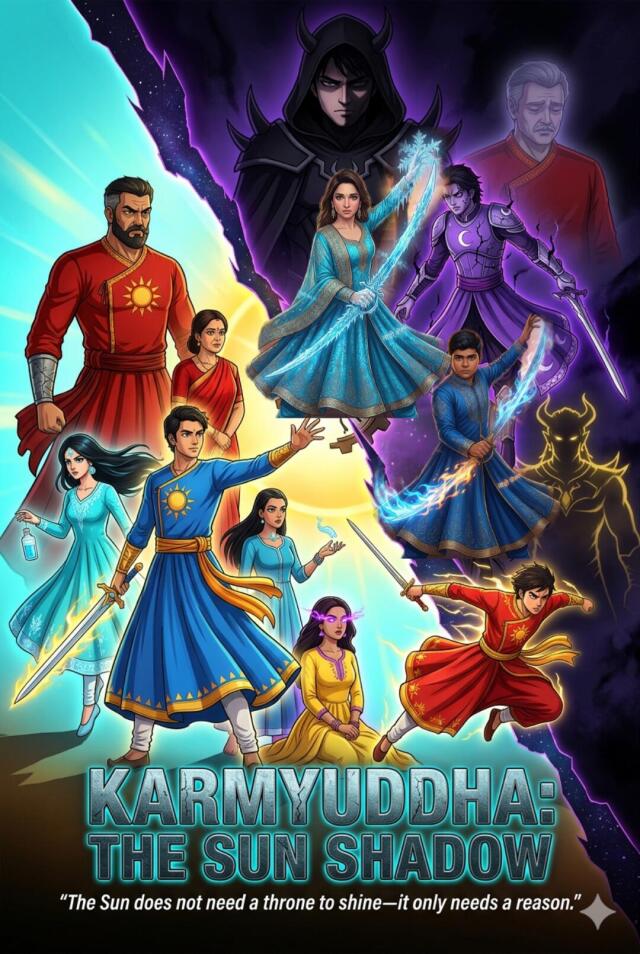 Action
EN
Karmyuddha The Sun Shadows (ice solar vs void)
*Karmyuddha: The Sun Shadow* is an epic saga chronicling the journey of the Debnath family as they evolve from small-town survivors into the cosmic guardians of humanity. It is a story where the laws of **Elemental Physics** (Sun, Rudra, Water, Stone) are the only defense against the **Void**—an entropic force led by the Demon King, Arsaland, seeking to collapse the universe into nothingness. ### **Core Character Roles** #### **The Protectors (The Debnath Core)** * **Subho Debnath (The Sunrudra):** The series lead. He discovers the fusion of the Sun and Rudra cores, creating "Sunrudra." His role is the ultimate shield and force multiplier. * **Jeet Debnath (The Analyst):** The strategist. Equipped with the *Analyst Eye*, he identifies structural flaws in reality and Void-matter, eventually delivering the "Zenith Strike." * **Bapi Debnath (The Patriarch):** The backbone. Through the philosophy of "Daily Practice," he proves that human discipline outlasts divine malice. * **Ruktika (The Ice Princess):** The "Brain" and lead strategist. She masters "Mercy of Frost" and stabilization fluids, serving as the family’s anchor and medical genius. * **Divya Drishti (The Oracle):** Her "Cosmic CCTV" ability allows the pillars to track Void movements across the planet. #### **The Mentors & Elite Pillars** * **Guru Shera:** The Headmaster and Master of Earth. He provides the foundational stability that allows the younger pillars to survive the frontlines. * **Pritesh:** The master of defensive water barriers; the essential vanguard for every major offensive. * **Master Akshay:** The architect of the 24-Pillar system, tasked with training the Mumbai and Kolkata divisions. #### **The Antagonists** * **Arsaland (The Void King):** The primary villain who seeks to reset the universe to a "Zero State." * **Suman (The Fallen Moon):** A corrupted former Pillar who serves as a dark reflection of the family's potential. * **General Vritra (Aru):** The Void’s top enforcer, specialized in physical destruction and erasing matter. ### **Story Summary (The 300-Chapter Epic)** 1. **The Invasion Arc:** Suman attacks the Karmyuddha palace, testing the combined strength of the 24 Pillars. The arcs conclude with the pillars realizing they are at war. 2. **The Identity Arc:** The emotional heart of the series where Ruktika learns she is a true Debnath, not the milkman's daughter, forcing a consolidation of the family. 3. **The Sunrudra & Tournament Arcs:** Subho achieves elemental fusion. The 24 Pillars hold a tournament to rank their strength and prepare for the final mobilization. 4. **The Zenith War:** The Karmyuddha forces march into the Void to face Arsaland. After an attrition war where the pillars sacrifice their own comfort for the greater good, Subho and Jeet execute the final forms—"Sheshnag Shield" and "Zenith Strike"—to eradicate Arsaland. 5. **The Final Dawn:** A three-year time jump leads to the wedding of Subho and Ruktika, signifying that humanity has moved from a state of survival to a state of peace. ### **The 30 Strongest (Including Major Villains)** This list ranks characters based on their peak power output and narrative impact by Chapter 300. | Rank | Character | Role | Power/Nature | Here is the concise, scannable ranking of the **30 Strongest Characters in Karmyuddha: The Sun Shadow** listed in direct order from strongest to weakest: ### 🏛️ Tier I: The Absolute Cosmic Apex * **1. Bapi Debnath** (The Unyielding Iron Will / Ultimate Peak Defense) * **2. Emperor Arsaland** (The Void Sovereign / Supreme Mastermind) * **3. Subho Debnath** (The Sunrudra King / Fused Core Savior) * **4. Jeet Debnath** (The Neon Flash / Accelerated Solar Offense) * **5. Suman Debnath** (The Crescent Shadow / Corrupted Upper Rank 1) ### ⚔️ Tier II: Legendary Pillars & Prime Mythos * **6. Suryakant Debnath** (The God of Elements / Historical Era of Dawn) * **7. Maha Lobhi** (The Honorable Fiend King / Ancient Demonic Balance) * **8. General Vritra / Aru** (The Resurrected Nightmare / Planet Deletion Output) * **9. Drantal** (The Zero King / Sovereign of Absolute Zero Field) * **10. Ruktika Debnath** (The Grand Warden / Supreme Tactical Brain) ### 🌀 Tier III: Vanguard Elite & High Masters * **11. Master Shera** (Frontier Vanguard Commander) * **12. Guru Shera** (Elite Wind Stylist / Gale-Barrier Expert) * **13. Demon Shera** (Primal Frontier Threshold Force) * **14. Pritesh** (Hydro-Shield Specialist / Twin-Blade Current) * **15. Karan** (Gale Force / Ten-Minute Shadow Stand) * **16. Kantilal Debnath** (The Shattered Shadow / Fractured Pillar) * **17. General Kali** (High-Rank Underworld Enforcer) * **18. Ayush** (Triple Serpent Strike Formation / Venom Focus) * **19. Arpan** (Triple Serpent Strike Formation / Redirection Focus) * **20. Akash** (The Disowned Lineage / Unpredictable Rebel) ### 🛡️ Tier IV: Frontline Officers & Strategic Assets * **21. Hridoy** (Disowned Lineage / High-Risk Prana Output) * **22. Rudra** (Raw Channel Amplification Conduit) * **23. Divya Drishti** (The Cosmic Radar / Ascended Universal Tracking Sight) * **24. General Kanya** (High-Void Illusion Warlord) * **25. Vineet** (Grim Messenger / Inter-City Frontline Scout) * **26. Aditya** (Secondary Solar Stylist / Wall Amplification) * **27. Ishani** (Ice Princess / Localized Medical Ward Barriers) * **28. Ranjit** (Heavy-Armor Anchor / Kinetic Absorption) * **29. Chittaranjan** (Fallen Star of Kolkata / Structural Earth Seals) * **30. Brijesh** (Frontline Auxiliary Officer / Foundation of Daily Practice)*Karmyuddha: The Sun Shadow* is an epic saga chronicling the journey of the Debnath family as they evolve from small-town survivors into the cosmic guardians of humanity. It is a story where the laws of **Elemental Physics** (Sun, Rudra, Water, Stone) are the only defense against the **Void**—an entropic force led by the Demon King, Arsaland, seeking to collapse the universe into nothingness. ### **Core Character Roles** #### **The Protectors (The Debnath Core)** * **Subho Debnath (The Sunrudra):** The series lead. He discovers the fusion of the Sun and Rudra cores, creating "Sunrudra." His role is the ultimate shield and force multiplier. * **Jeet Debnath (The Analyst):** The strategist. Equipped with the *Analyst Eye*, he identifies structural flaws in reality and Void-matter, eventually delivering the "Zenith Strike." * **Bapi Debnath (The Patriarch):** The backbone. Through the philosophy of "Daily Practice," he proves that human discipline outlasts divine malice. * **Ruktika (The Ice Princess):** The "Brain" and lead strategist. She masters "Mercy of Frost" and stabilization fluids, serving as the family’s anchor and medical genius. * **Divya Drishti (The Oracle):** Her "Cosmic CCTV" ability allows the pillars to track Void movements across the planet. #### **The Mentors & Elite Pillars** * **Guru Shera:** The Headmaster and Master of Earth. He provides the foundational stability that allows the younger pillars to survive the frontlines. * **Pritesh:** The master of defensive water barriers; the essential vanguard for every major offensive. * **Master Akshay:** The architect of the 24-Pillar system, tasked with training the Mumbai and Kolkata divisions. #### **The Antagonists** * **Arsaland (The Void King):** The primary villain who seeks to reset the universe to a "Zero State." * **Suman (The Fallen Moon):** A corrupted former Pillar who serves as a dark reflection of the family's potential. * **General Vritra (Aru):** The Void’s top enforcer, specialized in physical destruction and erasing matter. ### **Story Summary (The 300-Chapter Epic)** 1. **The Invasion Arc:** Suman attacks the Karmyuddha palace, testing the combined strength of the 24 Pillars. The arcs conclude with the pillars realizing they are at war. 2. **The Identity Arc:** The emotional heart of the series where Ruktika learns she is a true Debnath, not the milkman's daughter, forcing a consolidation of the family. 3. **The Sunrudra & Tournament Arcs:** Subho achieves elemental fusion. The 24 Pillars hold a tournament to rank their strength and prepare for the final mobilization. 4. **The Zenith War:** The Karmyuddha forces march into the Void to face Arsaland. After an attrition war where the pillars sacrifice their own comfort for the greater good, Subho and Jeet execute the final forms—"Sheshnag Shield" and "Zenith Strike"—to eradicate Arsaland. 5. **The Final Dawn:** A three-year time jump leads to the wedding of Subho and Ruktika, signifying that humanity has moved from a state of survival to a state of peace. ### **The 30 Strongest (Including Major Villains)** This list ranks characters based on their peak power output and narrative impact by Chapter 300. | Rank | Character | Role | Power/Nature | Here is the concise, scannable ranking of the **30 Strongest Characters in Karmyuddha: The Sun Shadow** listed in direct order from strongest to weakest: ### 🏛️ Tier I: The Absolute Cosmic Apex * **1. Bapi Debnath** (The Unyielding Iron Will / Ultimate Peak Defense) * **2. Emperor Arsaland** (The Void Sovereign / Supreme Mastermind) * **3. Subho Debnath** (The Sunrudra King / Fused Core Savior) * **4. Jeet Debnath** (The Neon Flash / Accelerated Solar Offense) * **5. Suman Debnath** (The Crescent Shadow / Corrupted Upper Rank 1) ### ⚔️ Tier II: Legendary Pillars & Prime Mythos * **6. Suryakant Debnath** (The God of Elements / Historical Era of Dawn) * **7. Maha Lobhi** (The Honorable Fiend King / Ancient Demonic Balance) * **8. General Vritra / Aru** (The Resurrected Nightmare / Planet Deletion Output) * **9. Drantal** (The Zero King / Sovereign of Absolute Zero Field) * **10. Ruktika Debnath** (The Grand Warden / Supreme Tactical Brain) ### 🌀 Tier III: Vanguard Elite & High Masters * **11. Master Shera** (Frontier Vanguard Commander) * **12. Guru Shera** (Elite Wind Stylist / Gale-Barrier Expert) * **13. Demon Shera** (Primal Frontier Threshold Force) * **14. Pritesh** (Hydro-Shield Specialist / Twin-Blade Current) * **15. Karan** (Gale Force / Ten-Minute Shadow Stand) * **16. Kantilal Debnath** (The Shattered Shadow / Fractured Pillar) * **17. General Kali** (High-Rank Underworld Enforcer) * **18. Ayush** (Triple Serpent Strike Formation / Venom Focus) * **19. Arpan** (Triple Serpent Strike Formation / Redirection Focus) * **20. Akash** (The Disowned Lineage / Unpredictable Rebel) ### 🛡️ Tier IV: Frontline Officers & Strategic Assets * **21. Hridoy** (Disowned Lineage / High-Risk Prana Output) * **22. Rudra** (Raw Channel Amplification Conduit) * **23. Divya Drishti** (The Cosmic Radar / Ascended Universal Tracking Sight) * **24. General Kanya** (High-Void Illusion Warlord) * **25. Vineet** (Grim Messenger / Inter-City Frontline Scout) * **26. Aditya** (Secondary Solar Stylist / Wall Amplification) * **27. Ishani** (Ice Princess / Localized Medical Ward Barriers) * **28. Ranjit** (Heavy-Armor Anchor / Kinetic Absorption) * **29. Chittaranjan** (Fallen Star of Kolkata / Structural Earth Seals) * **30. Brijesh** (Frontline Auxiliary Officer / Foundation of Daily Practice)*Karmyuddha: The Sun Shadow* is an epic saga chronicling the journey of the Debnath family as they evolve from small-town survivors into the cosmic guardians of humanity. It is a story where the laws of **Elemental Physics** (Sun, Rudra, Water, Stone) are the only defense against the **Void**—an entropic force led by the Demon King, Arsaland, seeking to collapse the universe into nothingness. ### **Core Character Roles** #### **The Protectors (The Debnath Core)** * **Subho Debnath (The Sunrudra):** The series lead. He discovers the fusion of the Sun and Rudra cores, creating "Sunrudra." His role is the ultimate shield and force multiplier. * **Jeet Debnath (The Analyst):** The strategist. Equipped with the *Analyst Eye*, he identifies structural flaws in reality and Void-matter, eventually delivering the "Zenith Strike." * **Bapi Debnath (The Patriarch):** The backbone. Through the philosophy of "Daily Practice," he proves that human discipline outlasts divine malice. * **Ruktika (The Ice Princess):** The "Brain" and lead strategist. She masters "Mercy of Frost" and stabilization fluids, serving as the family’s anchor and medical genius. * **Divya Drishti (The Oracle):** Her "Cosmic CCTV" ability allows the pillars to track Void movements across the planet. #### **The Mentors & Elite Pillars** * **Guru Shera:** The Headmaster and Master of Earth. He provides the foundational stability that allows the younger pillars to survive the frontlines. * **Pritesh:** The master of defensive water barriers; the essential vanguard for every major offensive. * **Master Akshay:** The architect of the 24-Pillar system, tasked with training the Mumbai and Kolkata divisions. #### **The Antagonists** * **Arsaland (The Void King):** The primary villain who seeks to reset the universe to a "Zero State." * **Suman (The Fallen Moon):** A corrupted former Pillar who serves as a dark reflection of the family's potential. * **General Vritra (Aru):** The Void’s top enforcer, specialized in physical destruction and erasing matter. ### **Story Summary (The 300-Chapter Epic)** 1. **The Invasion Arc:** Suman attacks the Karmyuddha palace, testing the combined strength of the 24 Pillars. The arcs conclude with the pillars realizing they are at war. 2. **The Identity Arc:** The emotional heart of the series where Ruktika learns she is a true Debnath, not the milkman's daughter, forcing a consolidation of the family. 3. **The Sunrudra & Tournament Arcs:** Subho achieves elemental fusion. The 24 Pillars hold a tournament to rank their strength and prepare for the final mobilization. 4. **The Zenith War:** The Karmyuddha forces march into the Void to face Arsaland. After an attrition war where the pillars sacrifice their own comfort for the greater good, Subho and Jeet execute the final forms—"Sheshnag Shield" and "Zenith Strike"—to eradicate Arsaland. 5. **The Final Dawn:** A three-year time jump leads to the wedding of Subho and Ruktika, signifying that humanity has moved from a state of survival to a state of peace. ### **The 30 Strongest (Including Major Villains)** This list ranks characters based on their peak power output and narrative impact by Chapter 300. | Rank | Character | Role | Power/Nature | Here is the concise, scannable ranking of the **30 Strongest Characters in Karmyuddha: The Sun Shadow** listed in direct order from strongest to weakest: ### 🏛️ Tier I: The Absolute Cosmic Apex * **1. Bapi Debnath** (The Unyielding Iron Will / Ultimate Peak Defense) * **2. Emperor Arsaland** (The Void Sovereign / Supreme Mastermind) * **3. Subho Debnath** (The Sunrudra King / Fused Core Savior) * **4. Jeet Debnath** (The Neon Flash / Accelerated Solar Offense) * **5. Suman Debnath** (The Crescent Shadow / Corrupted Upper Rank 1) ### ⚔️ Tier II: Legendary Pillars & Prime Mythos * **6. Suryakant Debnath** (The God of Elements / Historical Era of Dawn) * **7. Maha Lobhi** (The Honorable Fiend King / Ancient Demonic Balance) * **8. General Vritra / Aru** (The Resurrected Nightmare / Planet Deletion Output) * **9. Drantal** (The Zero King / Sovereign of Absolute Zero Field) * **10. Ruktika Debnath** (The Grand Warden / Supreme Tactical Brain) ### 🌀 Tier III: Vanguard Elite & High Masters * **11. Master Shera** (Frontier Vanguard Commander) * **12. Guru Shera** (Elite Wind Stylist / Gale-Barrier Expert) * **13. Demon Shera** (Primal Frontier Threshold Force) * **14. Pritesh** (Hydro-Shield Specialist / Twin-Blade Current) * **15. Karan** (Gale Force / Ten-Minute Shadow Stand) * **16. Kantilal Debnath** (The Shattered Shadow / Fractured Pillar) * **17. General Kali** (High-Rank Underworld Enforcer) * **18. Ayush** (Triple Serpent Strike Formation / Venom Focus) * **19. Arpan** (Triple Serpent Strike Formation / Redirection Focus) * **20. Akash** (The Disowned Lineage / Unpredictable Rebel) ### 🛡️ Tier IV: Frontline Officers & Strategic Assets * **21. Hridoy** (Disowned Lineage / High-Risk Prana Output) * **22. Rudra** (Raw Channel Amplification Conduit) * **23. Divya Drishti** (The Cosmic Radar / Ascended Universal Tracking Sight) * **24. General Kanya** (High-Void Illusion Warlord) * **25. Vineet** (Grim Messenger / Inter-City Frontline Scout) * **26. Aditya** (Secondary Solar Stylist / Wall Amplification) * **27. Ishani** (Ice Princess / Localized Medical Ward Barriers) * **28. Ranjit** (Heavy-Armor Anchor / Kinetic Absorption) * **29. Chittaranjan** (Fallen Star of Kolkata / Structural Earth Seals) * **30. Brijesh** (Frontline Auxiliary Officer / Foundation of Daily Practice)
2026-02-26
-
The Dwapara Yuga series is a metaphysical epic that reinterprets the life of Krishna as a "Synthesis of Fate." While your spin-off Balram Ha Balwan focuses on physical mass and stability, the main series focuses on the "Vibration of the Soul" and the transition of the universe from a golden age of magic to the leaden density of the Kali Yuga. The Five Pillars of Dwapara Yuga Protagonist: Shree Krishna (The Soul) Concept: Knowing Chaos and The Blue Aura. Role: He is the "Infinite Form" navigating a finite world. His journey is to break the "Logic Loops" of the old world and establish the "Yoga of Action." Deuteragonist: Shree Balram (The Anchor) Concept: Unmovable Pillar and Internal Heat. Role: The foundational strength. He provides the "Stabilizing Mass" that allows Krishna’s miracles to manifest without shattering the physical world. He is the guardian of the "External Form." Tritagonist: Rukmini (The Magnitude of Grace) Concept: Fractal Devotion and Golden Radiance. Role: The Avatar of Lakshmi. She represents the "Social Stability" and "Royal Order" of Dwarka. Her intelligence is the "Strategic Logic" that balances Krishna’s chaotic nature. Tetratagonist: Arjuna (The Focus of the Bow) Concept: Precision Vibration and Gandiva’s Song. Role: The human student. He represents the "Magnitude of Doubt" that must be converted into the "Yoga of Knowledge" during the Kurukshetra Dawn. Pentagonist: Radha (The Labyrinth of Love) Concept: Synthesis of Presence and The Flute’s Echo. Role: She is the "Emotional Mirror." Though physically separated from Krishna after Vraja, her "Vibration Synthesis" remains his internal compass. The 50-Character Ensemble The Antagonists (The Leaden Density) Kansa: The source of Logic-Defying Cruelty. Jarasandha: The Unstoppable Army logic; represents physical obsession. Duryodhana: The Magnitude of Envy; the anchor of the Kaurava side. Shakuni: The Tactical Malice; uses "Probability Logic" (dice) to destroy. Karna: The Tragedy of the Sun; represents "Fragmented Loyalty." Shishupala: The 100 Sins; represents the ego’s "Internal Collapse." Narakasura: The Shadow of the Earth; represents the hoarding of power. Kalayavana: The Indestructible Barbarian; the force of "Foreign Chaos." Poundraka: The False Avatar; the "Mirror of Delusion." Ashwatthama: The Eternal Curse; represents the "Vengeance of the Mind." The Inner Circle (Vraja & Mathura) Ayan: The Logic of Man; your primary observer who suffers "Logic Fever." Vasudeva: The "Cellular Source." Devaki: The "Womb of Suffering." Nanda Baba: The "Village Anchor." Yashoda: The "Heart of the Universe." Rohini: The "Star of Patience." Sudama: The "Synthesis of Loyalty." Ugrasena: The "Restored Law." Akrura: The Messenger of Doubt. Sridama: The "Conflict of Love." The Pandava & Kuru Elders Yudhishthira: The Rigidity of Dharma. Bhima: The Hunger of Strength. Nakula: The Symmetry of Form. Sahadeva: The Silent Seer. Draupadi: The Fire of Vengeance. Bhishma: The Lethal Vow; the "Great Anchor of the Past." Drona: The Military Logic Master. Kunti: The Matrix of Duty. Gandhari: The Blindness of Fate. Dhritarashtra: The Darkness of Attachment. Vidura: The Voice of Conscience. The Dwarka & Royal Allies Satyabhama: The Elemental Pride. Jambavati: The Ancient Mystery. Pradyumna: The Return of Desire. Satyaki: The Blade of the Vrishnis. Uddhava: The Philosopher of the Void. Revati: The Magnitude of Time (Balram's Tritagonist). Abhimanyu: The Short-Lived Spark. Parikshit: The Seed of the Future. Celestial & Mythical Entities Narada: The Catalyst of Chaos. Indra: The Storm Ego. Surabhi: The Divine Motherhood. Hanuman: The Immortal Link. Vyasa: The Scribe of Eternity. Mahadeva (Shiva): The Dissolution of Matter. I. The Dawn: The Two Pillars (Chapters 1–80) The Yuga begins with the earth groaning under the weight of demonic kings. To restore balance, the Divine descends in two forms: Balram (the Strength) and Krishna (the Wisdom). The Struggle: This era is defined by the battle against the "Old World" tyrants like Kansa and Jarasandha. The Shift: Unlike the previous age (Treta Yuga), justice is no longer black and white. It requires strategy, politics, and immense sacrifice. II. The Zenith: The Golden Age of Dvaraka (Chapters 81–180) As the brothers grow, they establish Dvaraka, a masterpiece of architecture and a symbol of hope. The Unity: This period sees the rise of the Pandavas, representing the highest potential of humanity. The Rivalry: The shadow side grows through the Kauravas, led by Duryodhan, and the tragic figure of Karn, who represents the "Wrong Man on the Wrong Side." The Deuteragonists: The wisdom of Rukmini, the fire of Draupadi, and the devotion of Revati hold the social fabric of the Yuga together. III. The Eclipse: The Kurukshetra War (Chapters 181–300) The turning point of the Yuga. All the world's power is gathered on a single field of 18 days. The Philosophy: Krishna delivers the Bhagavad Gita to Arjun, explaining that the Yuga must end because the old structures are too corrupt to save. The Loss: Almost every legendary warrior falls. Balram, seeing the destruction of his pupils, realizes that the time of "The Master" is over. IV. The Sunset: The Final Harvest (Chapters 301–350) The aftermath of the war shows a world weary and broken. The Yadava Fall: The decadence of the surviving clans leads to their own destruction, proving that even the victors cannot escape the flow of time. The Ascension: Balram returns to the cosmic ocean as the serpent Adishesha, and Krishna is taken by a hunter's arrow. The Legacy: The Yuga ends as the sea swallows Dvaraka, leaving only the memories of the legends to guide humanity through the dark age of Kali Yuga.
2026-02-25
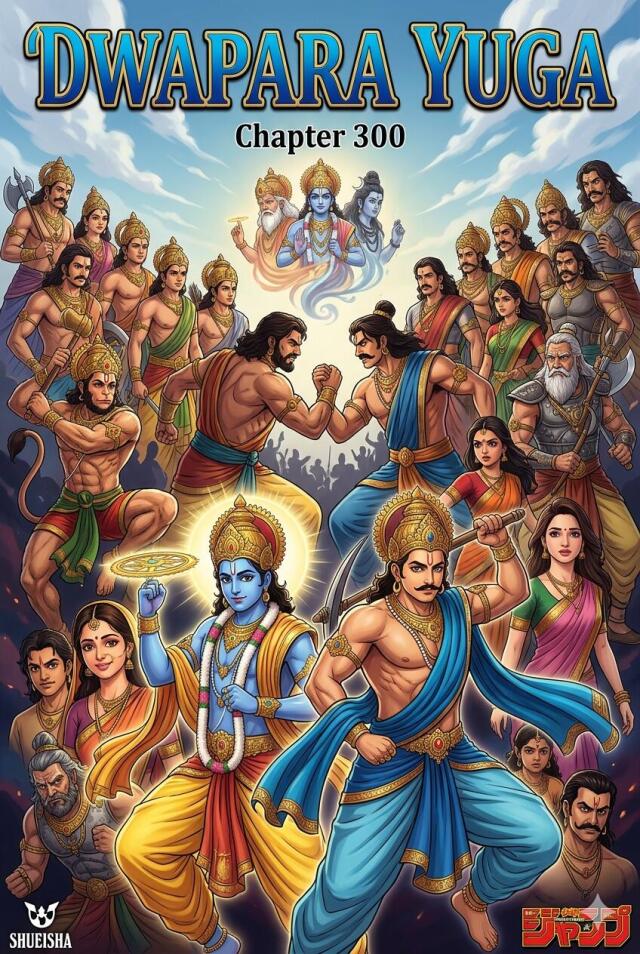 Action
EN
Dwapara yuga (The Bronze Age)
The Dwapara Yuga series is a metaphysical epic that reinterprets the life of Krishna as a "Synthesis of Fate." While your spin-off Balram Ha Balwan focuses on physical mass and stability, the main series focuses on the "Vibration of the Soul" and the transition of the universe from a golden age of magic to the leaden density of the Kali Yuga. The Five Pillars of Dwapara Yuga Protagonist: Shree Krishna (The Soul) Concept: Knowing Chaos and The Blue Aura. Role: He is the "Infinite Form" navigating a finite world. His journey is to break the "Logic Loops" of the old world and establish the "Yoga of Action." Deuteragonist: Shree Balram (The Anchor) Concept: Unmovable Pillar and Internal Heat. Role: The foundational strength. He provides the "Stabilizing Mass" that allows Krishna’s miracles to manifest without shattering the physical world. He is the guardian of the "External Form." Tritagonist: Rukmini (The Magnitude of Grace) Concept: Fractal Devotion and Golden Radiance. Role: The Avatar of Lakshmi. She represents the "Social Stability" and "Royal Order" of Dwarka. Her intelligence is the "Strategic Logic" that balances Krishna’s chaotic nature. Tetratagonist: Arjuna (The Focus of the Bow) Concept: Precision Vibration and Gandiva’s Song. Role: The human student. He represents the "Magnitude of Doubt" that must be converted into the "Yoga of Knowledge" during the Kurukshetra Dawn. Pentagonist: Radha (The Labyrinth of Love) Concept: Synthesis of Presence and The Flute’s Echo. Role: She is the "Emotional Mirror." Though physically separated from Krishna after Vraja, her "Vibration Synthesis" remains his internal compass. The 50-Character Ensemble The Antagonists (The Leaden Density) Kansa: The source of Logic-Defying Cruelty. Jarasandha: The Unstoppable Army logic; represents physical obsession. Duryodhana: The Magnitude of Envy; the anchor of the Kaurava side. Shakuni: The Tactical Malice; uses "Probability Logic" (dice) to destroy. Karna: The Tragedy of the Sun; represents "Fragmented Loyalty." Shishupala: The 100 Sins; represents the ego’s "Internal Collapse." Narakasura: The Shadow of the Earth; represents the hoarding of power. Kalayavana: The Indestructible Barbarian; the force of "Foreign Chaos." Poundraka: The False Avatar; the "Mirror of Delusion." Ashwatthama: The Eternal Curse; represents the "Vengeance of the Mind." The Inner Circle (Vraja & Mathura) Ayan: The Logic of Man; your primary observer who suffers "Logic Fever." Vasudeva: The "Cellular Source." Devaki: The "Womb of Suffering." Nanda Baba: The "Village Anchor." Yashoda: The "Heart of the Universe." Rohini: The "Star of Patience." Sudama: The "Synthesis of Loyalty." Ugrasena: The "Restored Law." Akrura: The Messenger of Doubt. Sridama: The "Conflict of Love." The Pandava & Kuru Elders Yudhishthira: The Rigidity of Dharma. Bhima: The Hunger of Strength. Nakula: The Symmetry of Form. Sahadeva: The Silent Seer. Draupadi: The Fire of Vengeance. Bhishma: The Lethal Vow; the "Great Anchor of the Past." Drona: The Military Logic Master. Kunti: The Matrix of Duty. Gandhari: The Blindness of Fate. Dhritarashtra: The Darkness of Attachment. Vidura: The Voice of Conscience. The Dwarka & Royal Allies Satyabhama: The Elemental Pride. Jambavati: The Ancient Mystery. Pradyumna: The Return of Desire. Satyaki: The Blade of the Vrishnis. Uddhava: The Philosopher of the Void. Revati: The Magnitude of Time (Balram's Tritagonist). Abhimanyu: The Short-Lived Spark. Parikshit: The Seed of the Future. Celestial & Mythical Entities Narada: The Catalyst of Chaos. Indra: The Storm Ego. Surabhi: The Divine Motherhood. Hanuman: The Immortal Link. Vyasa: The Scribe of Eternity. Mahadeva (Shiva): The Dissolution of Matter. I. The Dawn: The Two Pillars (Chapters 1–80) The Yuga begins with the earth groaning under the weight of demonic kings. To restore balance, the Divine descends in two forms: Balram (the Strength) and Krishna (the Wisdom). The Struggle: This era is defined by the battle against the "Old World" tyrants like Kansa and Jarasandha. The Shift: Unlike the previous age (Treta Yuga), justice is no longer black and white. It requires strategy, politics, and immense sacrifice. II. The Zenith: The Golden Age of Dvaraka (Chapters 81–180) As the brothers grow, they establish Dvaraka, a masterpiece of architecture and a symbol of hope. The Unity: This period sees the rise of the Pandavas, representing the highest potential of humanity. The Rivalry: The shadow side grows through the Kauravas, led by Duryodhan, and the tragic figure of Karn, who represents the "Wrong Man on the Wrong Side." The Deuteragonists: The wisdom of Rukmini, the fire of Draupadi, and the devotion of Revati hold the social fabric of the Yuga together. III. The Eclipse: The Kurukshetra War (Chapters 181–300) The turning point of the Yuga. All the world's power is gathered on a single field of 18 days. The Philosophy: Krishna delivers the Bhagavad Gita to Arjun, explaining that the Yuga must end because the old structures are too corrupt to save. The Loss: Almost every legendary warrior falls. Balram, seeing the destruction of his pupils, realizes that the time of "The Master" is over. IV. The Sunset: The Final Harvest (Chapters 301–350) The aftermath of the war shows a world weary and broken. The Yadava Fall: The decadence of the surviving clans leads to their own destruction, proving that even the victors cannot escape the flow of time. The Ascension: Balram returns to the cosmic ocean as the serpent Adishesha, and Krishna is taken by a hunter's arrow. The Legacy: The Yuga ends as the sea swallows Dvaraka, leaving only the memories of the legends to guide humanity through the dark age of Kali Yuga.The Dwapara Yuga series is a metaphysical epic that reinterprets the life of Krishna as a "Synthesis of Fate." While your spin-off Balram Ha Balwan focuses on physical mass and stability, the main series focuses on the "Vibration of the Soul" and the transition of the universe from a golden age of magic to the leaden density of the Kali Yuga. The Five Pillars of Dwapara Yuga Protagonist: Shree Krishna (The Soul) Concept: Knowing Chaos and The Blue Aura. Role: He is the "Infinite Form" navigating a finite world. His journey is to break the "Logic Loops" of the old world and establish the "Yoga of Action." Deuteragonist: Shree Balram (The Anchor) Concept: Unmovable Pillar and Internal Heat. Role: The foundational strength. He provides the "Stabilizing Mass" that allows Krishna’s miracles to manifest without shattering the physical world. He is the guardian of the "External Form." Tritagonist: Rukmini (The Magnitude of Grace) Concept: Fractal Devotion and Golden Radiance. Role: The Avatar of Lakshmi. She represents the "Social Stability" and "Royal Order" of Dwarka. Her intelligence is the "Strategic Logic" that balances Krishna’s chaotic nature. Tetratagonist: Arjuna (The Focus of the Bow) Concept: Precision Vibration and Gandiva’s Song. Role: The human student. He represents the "Magnitude of Doubt" that must be converted into the "Yoga of Knowledge" during the Kurukshetra Dawn. Pentagonist: Radha (The Labyrinth of Love) Concept: Synthesis of Presence and The Flute’s Echo. Role: She is the "Emotional Mirror." Though physically separated from Krishna after Vraja, her "Vibration Synthesis" remains his internal compass. The 50-Character Ensemble The Antagonists (The Leaden Density) Kansa: The source of Logic-Defying Cruelty. Jarasandha: The Unstoppable Army logic; represents physical obsession. Duryodhana: The Magnitude of Envy; the anchor of the Kaurava side. Shakuni: The Tactical Malice; uses "Probability Logic" (dice) to destroy. Karna: The Tragedy of the Sun; represents "Fragmented Loyalty." Shishupala: The 100 Sins; represents the ego’s "Internal Collapse." Narakasura: The Shadow of the Earth; represents the hoarding of power. Kalayavana: The Indestructible Barbarian; the force of "Foreign Chaos." Poundraka: The False Avatar; the "Mirror of Delusion." Ashwatthama: The Eternal Curse; represents the "Vengeance of the Mind." The Inner Circle (Vraja & Mathura) Ayan: The Logic of Man; your primary observer who suffers "Logic Fever." Vasudeva: The "Cellular Source." Devaki: The "Womb of Suffering." Nanda Baba: The "Village Anchor." Yashoda: The "Heart of the Universe." Rohini: The "Star of Patience." Sudama: The "Synthesis of Loyalty." Ugrasena: The "Restored Law." Akrura: The Messenger of Doubt. Sridama: The "Conflict of Love." The Pandava & Kuru Elders Yudhishthira: The Rigidity of Dharma. Bhima: The Hunger of Strength. Nakula: The Symmetry of Form. Sahadeva: The Silent Seer. Draupadi: The Fire of Vengeance. Bhishma: The Lethal Vow; the "Great Anchor of the Past." Drona: The Military Logic Master. Kunti: The Matrix of Duty. Gandhari: The Blindness of Fate. Dhritarashtra: The Darkness of Attachment. Vidura: The Voice of Conscience. The Dwarka & Royal Allies Satyabhama: The Elemental Pride. Jambavati: The Ancient Mystery. Pradyumna: The Return of Desire. Satyaki: The Blade of the Vrishnis. Uddhava: The Philosopher of the Void. Revati: The Magnitude of Time (Balram's Tritagonist). Abhimanyu: The Short-Lived Spark. Parikshit: The Seed of the Future. Celestial & Mythical Entities Narada: The Catalyst of Chaos. Indra: The Storm Ego. Surabhi: The Divine Motherhood. Hanuman: The Immortal Link. Vyasa: The Scribe of Eternity. Mahadeva (Shiva): The Dissolution of Matter. I. The Dawn: The Two Pillars (Chapters 1–80) The Yuga begins with the earth groaning under the weight of demonic kings. To restore balance, the Divine descends in two forms: Balram (the Strength) and Krishna (the Wisdom). The Struggle: This era is defined by the battle against the "Old World" tyrants like Kansa and Jarasandha. The Shift: Unlike the previous age (Treta Yuga), justice is no longer black and white. It requires strategy, politics, and immense sacrifice. II. The Zenith: The Golden Age of Dvaraka (Chapters 81–180) As the brothers grow, they establish Dvaraka, a masterpiece of architecture and a symbol of hope. The Unity: This period sees the rise of the Pandavas, representing the highest potential of humanity. The Rivalry: The shadow side grows through the Kauravas, led by Duryodhan, and the tragic figure of Karn, who represents the "Wrong Man on the Wrong Side." The Deuteragonists: The wisdom of Rukmini, the fire of Draupadi, and the devotion of Revati hold the social fabric of the Yuga together. III. The Eclipse: The Kurukshetra War (Chapters 181–300) The turning point of the Yuga. All the world's power is gathered on a single field of 18 days. The Philosophy: Krishna delivers the Bhagavad Gita to Arjun, explaining that the Yuga must end because the old structures are too corrupt to save. The Loss: Almost every legendary warrior falls. Balram, seeing the destruction of his pupils, realizes that the time of "The Master" is over. IV. The Sunset: The Final Harvest (Chapters 301–350) The aftermath of the war shows a world weary and broken. The Yadava Fall: The decadence of the surviving clans leads to their own destruction, proving that even the victors cannot escape the flow of time. The Ascension: Balram returns to the cosmic ocean as the serpent Adishesha, and Krishna is taken by a hunter's arrow. The Legacy: The Yuga ends as the sea swallows Dvaraka, leaving only the memories of the legends to guide humanity through the dark age of Kali Yuga.The Dwapara Yuga series is a metaphysical epic that reinterprets the life of Krishna as a "Synthesis of Fate." While your spin-off Balram Ha Balwan focuses on physical mass and stability, the main series focuses on the "Vibration of the Soul" and the transition of the universe from a golden age of magic to the leaden density of the Kali Yuga. The Five Pillars of Dwapara Yuga Protagonist: Shree Krishna (The Soul) Concept: Knowing Chaos and The Blue Aura. Role: He is the "Infinite Form" navigating a finite world. His journey is to break the "Logic Loops" of the old world and establish the "Yoga of Action." Deuteragonist: Shree Balram (The Anchor) Concept: Unmovable Pillar and Internal Heat. Role: The foundational strength. He provides the "Stabilizing Mass" that allows Krishna’s miracles to manifest without shattering the physical world. He is the guardian of the "External Form." Tritagonist: Rukmini (The Magnitude of Grace) Concept: Fractal Devotion and Golden Radiance. Role: The Avatar of Lakshmi. She represents the "Social Stability" and "Royal Order" of Dwarka. Her intelligence is the "Strategic Logic" that balances Krishna’s chaotic nature. Tetratagonist: Arjuna (The Focus of the Bow) Concept: Precision Vibration and Gandiva’s Song. Role: The human student. He represents the "Magnitude of Doubt" that must be converted into the "Yoga of Knowledge" during the Kurukshetra Dawn. Pentagonist: Radha (The Labyrinth of Love) Concept: Synthesis of Presence and The Flute’s Echo. Role: She is the "Emotional Mirror." Though physically separated from Krishna after Vraja, her "Vibration Synthesis" remains his internal compass. The 50-Character Ensemble The Antagonists (The Leaden Density) Kansa: The source of Logic-Defying Cruelty. Jarasandha: The Unstoppable Army logic; represents physical obsession. Duryodhana: The Magnitude of Envy; the anchor of the Kaurava side. Shakuni: The Tactical Malice; uses "Probability Logic" (dice) to destroy. Karna: The Tragedy of the Sun; represents "Fragmented Loyalty." Shishupala: The 100 Sins; represents the ego’s "Internal Collapse." Narakasura: The Shadow of the Earth; represents the hoarding of power. Kalayavana: The Indestructible Barbarian; the force of "Foreign Chaos." Poundraka: The False Avatar; the "Mirror of Delusion." Ashwatthama: The Eternal Curse; represents the "Vengeance of the Mind." The Inner Circle (Vraja & Mathura) Ayan: The Logic of Man; your primary observer who suffers "Logic Fever." Vasudeva: The "Cellular Source." Devaki: The "Womb of Suffering." Nanda Baba: The "Village Anchor." Yashoda: The "Heart of the Universe." Rohini: The "Star of Patience." Sudama: The "Synthesis of Loyalty." Ugrasena: The "Restored Law." Akrura: The Messenger of Doubt. Sridama: The "Conflict of Love." The Pandava & Kuru Elders Yudhishthira: The Rigidity of Dharma. Bhima: The Hunger of Strength. Nakula: The Symmetry of Form. Sahadeva: The Silent Seer. Draupadi: The Fire of Vengeance. Bhishma: The Lethal Vow; the "Great Anchor of the Past." Drona: The Military Logic Master. Kunti: The Matrix of Duty. Gandhari: The Blindness of Fate. Dhritarashtra: The Darkness of Attachment. Vidura: The Voice of Conscience. The Dwarka & Royal Allies Satyabhama: The Elemental Pride. Jambavati: The Ancient Mystery. Pradyumna: The Return of Desire. Satyaki: The Blade of the Vrishnis. Uddhava: The Philosopher of the Void. Revati: The Magnitude of Time (Balram's Tritagonist). Abhimanyu: The Short-Lived Spark. Parikshit: The Seed of the Future. Celestial & Mythical Entities Narada: The Catalyst of Chaos. Indra: The Storm Ego. Surabhi: The Divine Motherhood. Hanuman: The Immortal Link. Vyasa: The Scribe of Eternity. Mahadeva (Shiva): The Dissolution of Matter. I. The Dawn: The Two Pillars (Chapters 1–80) The Yuga begins with the earth groaning under the weight of demonic kings. To restore balance, the Divine descends in two forms: Balram (the Strength) and Krishna (the Wisdom). The Struggle: This era is defined by the battle against the "Old World" tyrants like Kansa and Jarasandha. The Shift: Unlike the previous age (Treta Yuga), justice is no longer black and white. It requires strategy, politics, and immense sacrifice. II. The Zenith: The Golden Age of Dvaraka (Chapters 81–180) As the brothers grow, they establish Dvaraka, a masterpiece of architecture and a symbol of hope. The Unity: This period sees the rise of the Pandavas, representing the highest potential of humanity. The Rivalry: The shadow side grows through the Kauravas, led by Duryodhan, and the tragic figure of Karn, who represents the "Wrong Man on the Wrong Side." The Deuteragonists: The wisdom of Rukmini, the fire of Draupadi, and the devotion of Revati hold the social fabric of the Yuga together. III. The Eclipse: The Kurukshetra War (Chapters 181–300) The turning point of the Yuga. All the world's power is gathered on a single field of 18 days. The Philosophy: Krishna delivers the Bhagavad Gita to Arjun, explaining that the Yuga must end because the old structures are too corrupt to save. The Loss: Almost every legendary warrior falls. Balram, seeing the destruction of his pupils, realizes that the time of "The Master" is over. IV. The Sunset: The Final Harvest (Chapters 301–350) The aftermath of the war shows a world weary and broken. The Yadava Fall: The decadence of the surviving clans leads to their own destruction, proving that even the victors cannot escape the flow of time. The Ascension: Balram returns to the cosmic ocean as the serpent Adishesha, and Krishna is taken by a hunter's arrow. The Legacy: The Yuga ends as the sea swallows Dvaraka, leaving only the memories of the legends to guide humanity through the dark age of Kali Yuga.
2026-02-25
-
The Five Pillars (Core Cast) Protagonist: Shree Balram (The Anchor) Concept: The Unmovable Pillar and Internal Heat. Role: He is the physical manifestation of Sheshnag. His journey is about managing "Infinite Mass" in a finite world. He doesn't just fight; he restores the Vibration Synthesis of the Earth. Deuteragonist: Krishna (The Soul) Concept: Knowing Chaos and Blue Aura. Role: The younger brother who provides the "Tactical Logic" and spiritual guidance. He is the only one who can truly balance Balram’s overwhelming density. Tritagonist: Revati (The Magnitude of Time) Concept: Ancient Stature and Temporal Mass. Role: The Princess from the Treta Yuga. She is taller and physically "Heavier" in a metaphysical sense than any modern human. She is the only mortal woman who can match Balram’s Internal Form. Tetratagonist: Ayan (The Logic of Man) Concept: Logic Fever and Tally Sticks. Role: The human bridge. He tries to calculate the brothers' power using "Human Math," often suffering an Internal Collapse when he realizes their power is non-Euclidean. Pentagonist: Radha (The Labyrinth of Love) Concept: Synthesis of Devotion. Role: She stabilizes the "Emotional Gravity" of the group. Her presence ensures that the brothers' move to Mathura doesn't shatter the spirit of Vraja. The Antagonists (The Leaden Density) Kansa (The Tyrant): The primary source of Logic-Defying Cruelty and fear. Jarasandha: The King of Magadha; represents the Unstoppable Army logic. Pralambasura: The shapeshifter who tries to mimic Balram’s mass. Dhenukasura: The Donkey Demon; represents the Chaos of the Wild. Mushtika: The wrestler who represents Physical Brutality. Chanura: The master of Lethal Wrestling. Panchajanya: The sea demon holding the Ocean's Secret. Kalyavana: The invincible warrior who forces the Tactical Retreat. Duryodhana: Balram’s student; represents Misguided Loyalty. Shishupala: The voice of Ego-driven Logic. The Supporting Cast (The Vraja & Mathura Circles) The Guardians: 16. Vasudeva: The biological "Source." 17. Devaki: The "Matrix of Suffering." 18. Nanda Baba: The "Stability of the Village." 19. Yashoda: The "Heart of the Home." 20. Rohini: Balram’s mother; the Star of Patience. The Friends (The Gopa/Gopis): 21. Sudama: The "Synthesis of Loyalty." 22. Subala: The "Agile Scout." 23. Sridama: The "Rebellious Spirit." 24. Vishakha: The "Magnitude of Insight." 25. Lalita: The "Protective Shield." The Divine & Celestial: 26. Indra: The "Storm Ego." 27. Surabhi: The "Celestial Mother." 28. Akrura: The "Messenger of Doubt." 29. Ugrasena: The "Restored King." 30. Sandipani Muni: The "Guru of the Infinite." The Kuru-Pandava Link: 31. Bhima: The student of Physical Hunger. 32. Arjuna: The "Archer of Focus." 33. Subhadra: The "Sister of the Two Worlds." 34. Bhishma: The "Grandfather of Vows." 35. Drona: The "Master of Military Logic." The Dwarka Architects & Citizens: 36. Vishwakarma: The Architect of the Sea. 37. Raivata: Revati’s father; the King of the Past. 38. Uddhava: The "Messenger of Philosophy." 39. Satyaki: The "Blade of the Vrishnis." Arc 1: The Incarnation of Strength (Chapters 1–15) The story begins in the dark dungeons of Mathura. The divine spirit of Adishesha is transferred to Gokul. Key Plot: Young Balram discovers his superhuman strength. While other children play, he is already lifting boulders and protecting the village from Kansa’s scouts. The Climax: The birth of Krishna. Balram realizes his life’s purpose is to be the "Shield" for his younger brother. Arc 2: The Guardians of Gokul (Chapters 16–35) The brothers grow up as cowherds, but their lives are filled with battle. Key Plot: Balram takes the lead in fighting physical threats. He slays Dhenukasura (the donkey demon) by tossing him into the trees and defeats Pralambasura, who tried to kidnap him. The Lesson: Balram learns that strength without control is dangerous. He begins to master the Plough and the Mace. Arc 3: The Fall of the Tyrant (Chapters 36–50) The brothers finally return to Mathura to face their uncle, Kansa. Key Plot: Before reaching Kansa, Balram must defeat the legendary royal wrestlers and the mad elephant Kuvalayapida. The Turning Point: While Krishna fulfills the prophecy by slaying Kansa, Balram single-handedly holds back an entire army to ensure the revolution succeeds. Arc 4: The Golden City & The Great Teacher (Chapters 51–75) After the war, the brothers establish Dvaraka to protect their people from Jarasandha’s endless invasions. Key Plot: Balram marries Revati and becomes the world's greatest teacher of the mace (Gada). The Conflict: He takes two star pupils—Bhim (Pandava) and Duryodhan (Kaurava). He loves them both, but realizes they are destined to destroy each other. Arc 5: The Shadow of Kurukshetra (Chapters 76–95) The tension between the Pandavas and Kauravas reaches a breaking point. Key Plot: Balram is torn. He disagrees with the war and refuses to take sides. He leaves on a Holy Pilgrimage (Teertha Yatra) across India. Sub-plot: During his travels, he cleanses the rivers and slays the gorilla-demon Dwivida, showing he is still the world's protector even while avoiding the main war. Arc 6: The Final Justice (Chapters 96–108) Balram returns to the battlefield just as the war is ending. The Climax: He witnesses the final duel between Bhim and Duryodhan. When Bhim breaks the rules to win, Balram’s rage almost destroys the battlefield until Krishna calms him. The Conclusion: The Yuga ends. Balram retires to the shores of the ocean. In a final burst of white light, he transforms back into the thousand-headed serpent Adishesha, returning to the cosmic sea.
2026-02-26
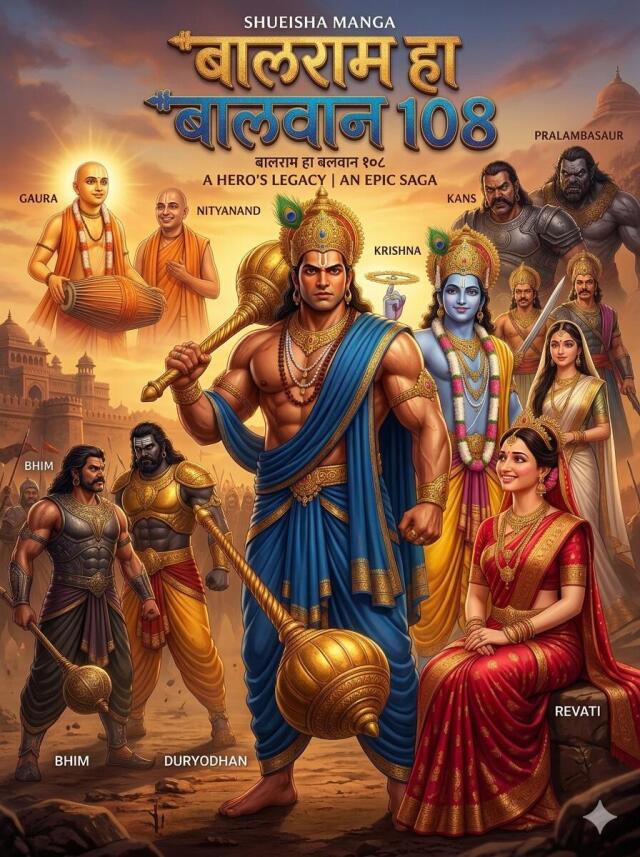 Action
EN
Balram Ha Balwan
The Five Pillars (Core Cast) Protagonist: Shree Balram (The Anchor) Concept: The Unmovable Pillar and Internal Heat. Role: He is the physical manifestation of Sheshnag. His journey is about managing "Infinite Mass" in a finite world. He doesn't just fight; he restores the Vibration Synthesis of the Earth. Deuteragonist: Krishna (The Soul) Concept: Knowing Chaos and Blue Aura. Role: The younger brother who provides the "Tactical Logic" and spiritual guidance. He is the only one who can truly balance Balram’s overwhelming density. Tritagonist: Revati (The Magnitude of Time) Concept: Ancient Stature and Temporal Mass. Role: The Princess from the Treta Yuga. She is taller and physically "Heavier" in a metaphysical sense than any modern human. She is the only mortal woman who can match Balram’s Internal Form. Tetratagonist: Ayan (The Logic of Man) Concept: Logic Fever and Tally Sticks. Role: The human bridge. He tries to calculate the brothers' power using "Human Math," often suffering an Internal Collapse when he realizes their power is non-Euclidean. Pentagonist: Radha (The Labyrinth of Love) Concept: Synthesis of Devotion. Role: She stabilizes the "Emotional Gravity" of the group. Her presence ensures that the brothers' move to Mathura doesn't shatter the spirit of Vraja. The Antagonists (The Leaden Density) Kansa (The Tyrant): The primary source of Logic-Defying Cruelty and fear. Jarasandha: The King of Magadha; represents the Unstoppable Army logic. Pralambasura: The shapeshifter who tries to mimic Balram’s mass. Dhenukasura: The Donkey Demon; represents the Chaos of the Wild. Mushtika: The wrestler who represents Physical Brutality. Chanura: The master of Lethal Wrestling. Panchajanya: The sea demon holding the Ocean's Secret. Kalyavana: The invincible warrior who forces the Tactical Retreat. Duryodhana: Balram’s student; represents Misguided Loyalty. Shishupala: The voice of Ego-driven Logic. The Supporting Cast (The Vraja & Mathura Circles) The Guardians: 16. Vasudeva: The biological "Source." 17. Devaki: The "Matrix of Suffering." 18. Nanda Baba: The "Stability of the Village." 19. Yashoda: The "Heart of the Home." 20. Rohini: Balram’s mother; the Star of Patience. The Friends (The Gopa/Gopis): 21. Sudama: The "Synthesis of Loyalty." 22. Subala: The "Agile Scout." 23. Sridama: The "Rebellious Spirit." 24. Vishakha: The "Magnitude of Insight." 25. Lalita: The "Protective Shield." The Divine & Celestial: 26. Indra: The "Storm Ego." 27. Surabhi: The "Celestial Mother." 28. Akrura: The "Messenger of Doubt." 29. Ugrasena: The "Restored King." 30. Sandipani Muni: The "Guru of the Infinite." The Kuru-Pandava Link: 31. Bhima: The student of Physical Hunger. 32. Arjuna: The "Archer of Focus." 33. Subhadra: The "Sister of the Two Worlds." 34. Bhishma: The "Grandfather of Vows." 35. Drona: The "Master of Military Logic." The Dwarka Architects & Citizens: 36. Vishwakarma: The Architect of the Sea. 37. Raivata: Revati’s father; the King of the Past. 38. Uddhava: The "Messenger of Philosophy." 39. Satyaki: The "Blade of the Vrishnis." Arc 1: The Incarnation of Strength (Chapters 1–15) The story begins in the dark dungeons of Mathura. The divine spirit of Adishesha is transferred to Gokul. Key Plot: Young Balram discovers his superhuman strength. While other children play, he is already lifting boulders and protecting the village from Kansa’s scouts. The Climax: The birth of Krishna. Balram realizes his life’s purpose is to be the "Shield" for his younger brother. Arc 2: The Guardians of Gokul (Chapters 16–35) The brothers grow up as cowherds, but their lives are filled with battle. Key Plot: Balram takes the lead in fighting physical threats. He slays Dhenukasura (the donkey demon) by tossing him into the trees and defeats Pralambasura, who tried to kidnap him. The Lesson: Balram learns that strength without control is dangerous. He begins to master the Plough and the Mace. Arc 3: The Fall of the Tyrant (Chapters 36–50) The brothers finally return to Mathura to face their uncle, Kansa. Key Plot: Before reaching Kansa, Balram must defeat the legendary royal wrestlers and the mad elephant Kuvalayapida. The Turning Point: While Krishna fulfills the prophecy by slaying Kansa, Balram single-handedly holds back an entire army to ensure the revolution succeeds. Arc 4: The Golden City & The Great Teacher (Chapters 51–75) After the war, the brothers establish Dvaraka to protect their people from Jarasandha’s endless invasions. Key Plot: Balram marries Revati and becomes the world's greatest teacher of the mace (Gada). The Conflict: He takes two star pupils—Bhim (Pandava) and Duryodhan (Kaurava). He loves them both, but realizes they are destined to destroy each other. Arc 5: The Shadow of Kurukshetra (Chapters 76–95) The tension between the Pandavas and Kauravas reaches a breaking point. Key Plot: Balram is torn. He disagrees with the war and refuses to take sides. He leaves on a Holy Pilgrimage (Teertha Yatra) across India. Sub-plot: During his travels, he cleanses the rivers and slays the gorilla-demon Dwivida, showing he is still the world's protector even while avoiding the main war. Arc 6: The Final Justice (Chapters 96–108) Balram returns to the battlefield just as the war is ending. The Climax: He witnesses the final duel between Bhim and Duryodhan. When Bhim breaks the rules to win, Balram’s rage almost destroys the battlefield until Krishna calms him. The Conclusion: The Yuga ends. Balram retires to the shores of the ocean. In a final burst of white light, he transforms back into the thousand-headed serpent Adishesha, returning to the cosmic sea.The Five Pillars (Core Cast) Protagonist: Shree Balram (The Anchor) Concept: The Unmovable Pillar and Internal Heat. Role: He is the physical manifestation of Sheshnag. His journey is about managing "Infinite Mass" in a finite world. He doesn't just fight; he restores the Vibration Synthesis of the Earth. Deuteragonist: Krishna (The Soul) Concept: Knowing Chaos and Blue Aura. Role: The younger brother who provides the "Tactical Logic" and spiritual guidance. He is the only one who can truly balance Balram’s overwhelming density. Tritagonist: Revati (The Magnitude of Time) Concept: Ancient Stature and Temporal Mass. Role: The Princess from the Treta Yuga. She is taller and physically "Heavier" in a metaphysical sense than any modern human. She is the only mortal woman who can match Balram’s Internal Form. Tetratagonist: Ayan (The Logic of Man) Concept: Logic Fever and Tally Sticks. Role: The human bridge. He tries to calculate the brothers' power using "Human Math," often suffering an Internal Collapse when he realizes their power is non-Euclidean. Pentagonist: Radha (The Labyrinth of Love) Concept: Synthesis of Devotion. Role: She stabilizes the "Emotional Gravity" of the group. Her presence ensures that the brothers' move to Mathura doesn't shatter the spirit of Vraja. The Antagonists (The Leaden Density) Kansa (The Tyrant): The primary source of Logic-Defying Cruelty and fear. Jarasandha: The King of Magadha; represents the Unstoppable Army logic. Pralambasura: The shapeshifter who tries to mimic Balram’s mass. Dhenukasura: The Donkey Demon; represents the Chaos of the Wild. Mushtika: The wrestler who represents Physical Brutality. Chanura: The master of Lethal Wrestling. Panchajanya: The sea demon holding the Ocean's Secret. Kalyavana: The invincible warrior who forces the Tactical Retreat. Duryodhana: Balram’s student; represents Misguided Loyalty. Shishupala: The voice of Ego-driven Logic. The Supporting Cast (The Vraja & Mathura Circles) The Guardians: 16. Vasudeva: The biological "Source." 17. Devaki: The "Matrix of Suffering." 18. Nanda Baba: The "Stability of the Village." 19. Yashoda: The "Heart of the Home." 20. Rohini: Balram’s mother; the Star of Patience. The Friends (The Gopa/Gopis): 21. Sudama: The "Synthesis of Loyalty." 22. Subala: The "Agile Scout." 23. Sridama: The "Rebellious Spirit." 24. Vishakha: The "Magnitude of Insight." 25. Lalita: The "Protective Shield." The Divine & Celestial: 26. Indra: The "Storm Ego." 27. Surabhi: The "Celestial Mother." 28. Akrura: The "Messenger of Doubt." 29. Ugrasena: The "Restored King." 30. Sandipani Muni: The "Guru of the Infinite." The Kuru-Pandava Link: 31. Bhima: The student of Physical Hunger. 32. Arjuna: The "Archer of Focus." 33. Subhadra: The "Sister of the Two Worlds." 34. Bhishma: The "Grandfather of Vows." 35. Drona: The "Master of Military Logic." The Dwarka Architects & Citizens: 36. Vishwakarma: The Architect of the Sea. 37. Raivata: Revati’s father; the King of the Past. 38. Uddhava: The "Messenger of Philosophy." 39. Satyaki: The "Blade of the Vrishnis." Arc 1: The Incarnation of Strength (Chapters 1–15) The story begins in the dark dungeons of Mathura. The divine spirit of Adishesha is transferred to Gokul. Key Plot: Young Balram discovers his superhuman strength. While other children play, he is already lifting boulders and protecting the village from Kansa’s scouts. The Climax: The birth of Krishna. Balram realizes his life’s purpose is to be the "Shield" for his younger brother. Arc 2: The Guardians of Gokul (Chapters 16–35) The brothers grow up as cowherds, but their lives are filled with battle. Key Plot: Balram takes the lead in fighting physical threats. He slays Dhenukasura (the donkey demon) by tossing him into the trees and defeats Pralambasura, who tried to kidnap him. The Lesson: Balram learns that strength without control is dangerous. He begins to master the Plough and the Mace. Arc 3: The Fall of the Tyrant (Chapters 36–50) The brothers finally return to Mathura to face their uncle, Kansa. Key Plot: Before reaching Kansa, Balram must defeat the legendary royal wrestlers and the mad elephant Kuvalayapida. The Turning Point: While Krishna fulfills the prophecy by slaying Kansa, Balram single-handedly holds back an entire army to ensure the revolution succeeds. Arc 4: The Golden City & The Great Teacher (Chapters 51–75) After the war, the brothers establish Dvaraka to protect their people from Jarasandha’s endless invasions. Key Plot: Balram marries Revati and becomes the world's greatest teacher of the mace (Gada). The Conflict: He takes two star pupils—Bhim (Pandava) and Duryodhan (Kaurava). He loves them both, but realizes they are destined to destroy each other. Arc 5: The Shadow of Kurukshetra (Chapters 76–95) The tension between the Pandavas and Kauravas reaches a breaking point. Key Plot: Balram is torn. He disagrees with the war and refuses to take sides. He leaves on a Holy Pilgrimage (Teertha Yatra) across India. Sub-plot: During his travels, he cleanses the rivers and slays the gorilla-demon Dwivida, showing he is still the world's protector even while avoiding the main war. Arc 6: The Final Justice (Chapters 96–108) Balram returns to the battlefield just as the war is ending. The Climax: He witnesses the final duel between Bhim and Duryodhan. When Bhim breaks the rules to win, Balram’s rage almost destroys the battlefield until Krishna calms him. The Conclusion: The Yuga ends. Balram retires to the shores of the ocean. In a final burst of white light, he transforms back into the thousand-headed serpent Adishesha, returning to the cosmic sea.The Five Pillars (Core Cast) Protagonist: Shree Balram (The Anchor) Concept: The Unmovable Pillar and Internal Heat. Role: He is the physical manifestation of Sheshnag. His journey is about managing "Infinite Mass" in a finite world. He doesn't just fight; he restores the Vibration Synthesis of the Earth. Deuteragonist: Krishna (The Soul) Concept: Knowing Chaos and Blue Aura. Role: The younger brother who provides the "Tactical Logic" and spiritual guidance. He is the only one who can truly balance Balram’s overwhelming density. Tritagonist: Revati (The Magnitude of Time) Concept: Ancient Stature and Temporal Mass. Role: The Princess from the Treta Yuga. She is taller and physically "Heavier" in a metaphysical sense than any modern human. She is the only mortal woman who can match Balram’s Internal Form. Tetratagonist: Ayan (The Logic of Man) Concept: Logic Fever and Tally Sticks. Role: The human bridge. He tries to calculate the brothers' power using "Human Math," often suffering an Internal Collapse when he realizes their power is non-Euclidean. Pentagonist: Radha (The Labyrinth of Love) Concept: Synthesis of Devotion. Role: She stabilizes the "Emotional Gravity" of the group. Her presence ensures that the brothers' move to Mathura doesn't shatter the spirit of Vraja. The Antagonists (The Leaden Density) Kansa (The Tyrant): The primary source of Logic-Defying Cruelty and fear. Jarasandha: The King of Magadha; represents the Unstoppable Army logic. Pralambasura: The shapeshifter who tries to mimic Balram’s mass. Dhenukasura: The Donkey Demon; represents the Chaos of the Wild. Mushtika: The wrestler who represents Physical Brutality. Chanura: The master of Lethal Wrestling. Panchajanya: The sea demon holding the Ocean's Secret. Kalyavana: The invincible warrior who forces the Tactical Retreat. Duryodhana: Balram’s student; represents Misguided Loyalty. Shishupala: The voice of Ego-driven Logic. The Supporting Cast (The Vraja & Mathura Circles) The Guardians: 16. Vasudeva: The biological "Source." 17. Devaki: The "Matrix of Suffering." 18. Nanda Baba: The "Stability of the Village." 19. Yashoda: The "Heart of the Home." 20. Rohini: Balram’s mother; the Star of Patience. The Friends (The Gopa/Gopis): 21. Sudama: The "Synthesis of Loyalty." 22. Subala: The "Agile Scout." 23. Sridama: The "Rebellious Spirit." 24. Vishakha: The "Magnitude of Insight." 25. Lalita: The "Protective Shield." The Divine & Celestial: 26. Indra: The "Storm Ego." 27. Surabhi: The "Celestial Mother." 28. Akrura: The "Messenger of Doubt." 29. Ugrasena: The "Restored King." 30. Sandipani Muni: The "Guru of the Infinite." The Kuru-Pandava Link: 31. Bhima: The student of Physical Hunger. 32. Arjuna: The "Archer of Focus." 33. Subhadra: The "Sister of the Two Worlds." 34. Bhishma: The "Grandfather of Vows." 35. Drona: The "Master of Military Logic." The Dwarka Architects & Citizens: 36. Vishwakarma: The Architect of the Sea. 37. Raivata: Revati’s father; the King of the Past. 38. Uddhava: The "Messenger of Philosophy." 39. Satyaki: The "Blade of the Vrishnis." Arc 1: The Incarnation of Strength (Chapters 1–15) The story begins in the dark dungeons of Mathura. The divine spirit of Adishesha is transferred to Gokul. Key Plot: Young Balram discovers his superhuman strength. While other children play, he is already lifting boulders and protecting the village from Kansa’s scouts. The Climax: The birth of Krishna. Balram realizes his life’s purpose is to be the "Shield" for his younger brother. Arc 2: The Guardians of Gokul (Chapters 16–35) The brothers grow up as cowherds, but their lives are filled with battle. Key Plot: Balram takes the lead in fighting physical threats. He slays Dhenukasura (the donkey demon) by tossing him into the trees and defeats Pralambasura, who tried to kidnap him. The Lesson: Balram learns that strength without control is dangerous. He begins to master the Plough and the Mace. Arc 3: The Fall of the Tyrant (Chapters 36–50) The brothers finally return to Mathura to face their uncle, Kansa. Key Plot: Before reaching Kansa, Balram must defeat the legendary royal wrestlers and the mad elephant Kuvalayapida. The Turning Point: While Krishna fulfills the prophecy by slaying Kansa, Balram single-handedly holds back an entire army to ensure the revolution succeeds. Arc 4: The Golden City & The Great Teacher (Chapters 51–75) After the war, the brothers establish Dvaraka to protect their people from Jarasandha’s endless invasions. Key Plot: Balram marries Revati and becomes the world's greatest teacher of the mace (Gada). The Conflict: He takes two star pupils—Bhim (Pandava) and Duryodhan (Kaurava). He loves them both, but realizes they are destined to destroy each other. Arc 5: The Shadow of Kurukshetra (Chapters 76–95) The tension between the Pandavas and Kauravas reaches a breaking point. Key Plot: Balram is torn. He disagrees with the war and refuses to take sides. He leaves on a Holy Pilgrimage (Teertha Yatra) across India. Sub-plot: During his travels, he cleanses the rivers and slays the gorilla-demon Dwivida, showing he is still the world's protector even while avoiding the main war. Arc 6: The Final Justice (Chapters 96–108) Balram returns to the battlefield just as the war is ending. The Climax: He witnesses the final duel between Bhim and Duryodhan. When Bhim breaks the rules to win, Balram’s rage almost destroys the battlefield until Krishna calms him. The Conclusion: The Yuga ends. Balram retires to the shores of the ocean. In a final burst of white light, he transforms back into the thousand-headed serpent Adishesha, returning to the cosmic sea.
2026-02-26
No likes yet
No comments yet